Best Brain Tumor Surgery Doctor in Gurgaon, Delhi NCR, India
Brain Tumor
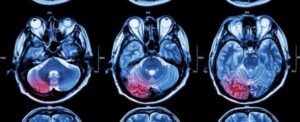
Brain tumor is a collection of mass or abnormal cells inside the brain. The skull, being a rigid structure, creates problems due to restricted space. Adults are more likely to suffer from brain tumors, but children exposed to high levels of radiation to the head may also develop them.
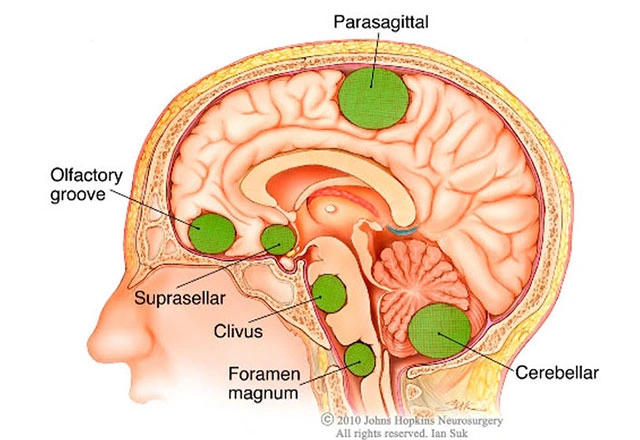
Generally, Brain Tumor of Two Kinds:
- Malignant Brain Tumor – cancerous in nature
- Benign Brain Tumor – non-cancerous
If this tumor spreads inside the skull, it may cause brain damage, which can be life-threatening.
Brain tumors can be categorized as primary and secondary. A primary brain tumor originates in the brain, while a secondary (metastatic) brain tumor occurs when cancer spreads to the brain from other parts of the body such as the lungs, breast, kidneys, or skin.
What Are the Symptoms of a Brain Tumor?
Symptoms and signs of a brain tumor vary from person to person and depend on the affected area. Common symptoms include:
- Severe headaches, often worse in the morning or during sleep
- Seizures or muscle twitching
- Changes in speech, hearing, or vision
- Balance problems or difficulty walking
- Numbness or tingling in the arms or legs
- Memory problems
- Personality changes or confusion
- Inability to concentrate
- Weakness in one part of the body
- Nausea and vomiting
- Mood swings
- Difficulty writing, reading, or swallowing
- Uncontrollable movements
- Eye problems (drooping eyelids, unequal pupils)
- Muscle weakness
- Nipple discharge or lack of menstruation in women
- Enlargement of hands and feet
- Sensitivity to heat or cold
Types of Brain Tumors:
- Acoustic neuroma
- Astrocytoma
- Brain metastases
- Choroid plexus carcinoma
- Craniopharyngioma
- Embryonal tumors
- Ependymoma
- Glioblastoma
- Glioma
- Medulloblastoma
- Meningioma
- Oligodendroglioma
- Pediatric brain tumors
- Pineoblastoma
- Pituitary tumors
These are generally Primary Brain Tumors. Secondary Brain Tumors spread from other body parts such as the lungs, breast, or skin.
Diagnosis of Brain Tumor:
Doctors begin with medical and family history, followed by diagnostic tests depending on the severity. Common tests include:
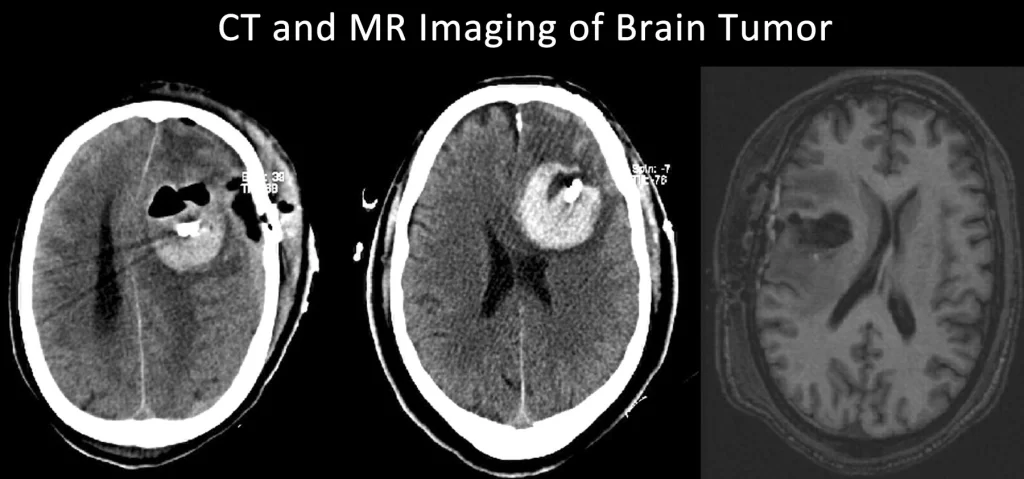
- Neurological Test: Checks vision, hearing, balance, coordination, and reflexes.
- CT Scan: X-ray linked with a computer creates detailed brain images. Contrast dye may be injected for clarity.
- MRI: A magnetic imaging process with injected dye helps highlight brain tissue differences.
- Angiogram or MRA: Dye-based imaging to detect tumors or blood vessel abnormalities.
- Spinal Tap: A small sample of cerebrospinal fluid is taken for testing tumor cells.
- Biopsy: Removal and analysis of tissue under a microscope to check for cancer or abnormal cells.
Causes and Risk Factors of Brain Tumor:
While no single cause is identified, risk factors include:
- Family History: 5–10% of brain cancers are inherited.
- Age: Risk increases with age.
- Race: Caucasians are more likely to develop certain tumors.
- Chemical Exposure: Contact with certain industrial chemicals increases risk.
- Radiation: Exposure to ionizing radiation may cause brain tumors.
Treatment of Brain Tumor:
Treatment depends on the tumor’s type, size, and location, as well as the patient’s health. Common options include:
- Surgery: Often the first step; aims to remove as much tumor as possible without damaging vital tissue.
- Radiation Therapy: High-energy beams target tumor cells. Can be whole-brain or focused.
- Radiosurgery: Non-invasive, high-precision radiation beams (e.g., Gamma Knife) kill tumor cells.
- Chemotherapy: Uses drugs (pills or injections) to kill cancer cells.
- Targeted Drug Therapy: Attacks specific abnormalities in tumor cells.
After Treatment Rehabilitation:
Because brain tumors affect various brain functions, rehabilitation therapies may include:
- Physical therapy to regain muscle strength
- Occupational therapy for daily activities
- Speech therapy to improve communication
- Special education for children recovering from treatment
Complementary therapies such as acupuncture, exercise, meditation, and relaxation can also help.
If you or a loved one experience symptoms of a brain tumor, consult a qualified Brain Tumor Surgeon in Gurgaon immediately.