Molluscum Contagiosum Treatment in Gurgaon — Causes, Symptoms, Stages & Cure
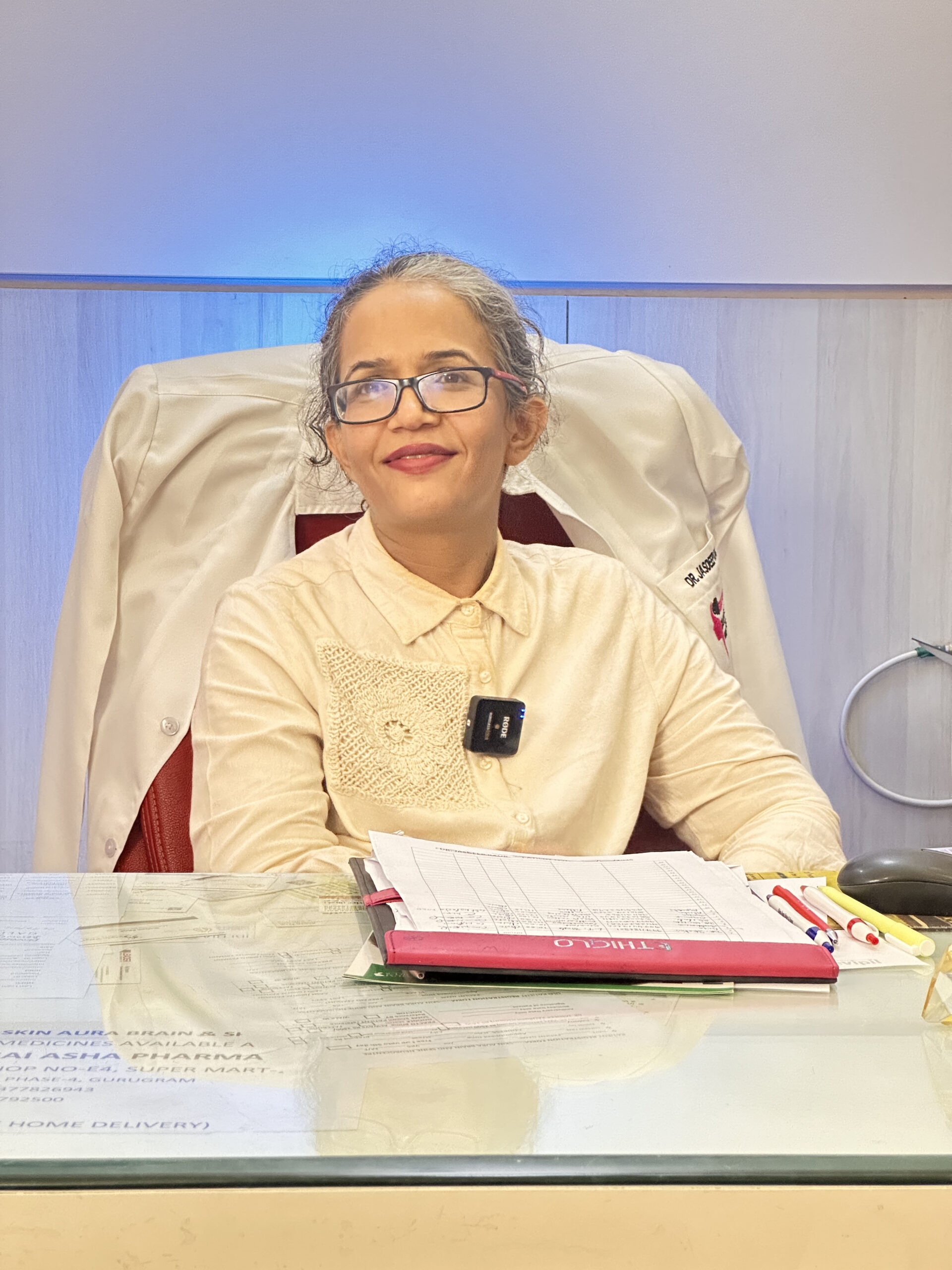
Medically reviewed by Dr. Jasdeep Kaur Malhotra, MBBS, DDVL — Dermatologist, Venereologist & Leprosy Specialist, SAB Clinic, Gurgaon.
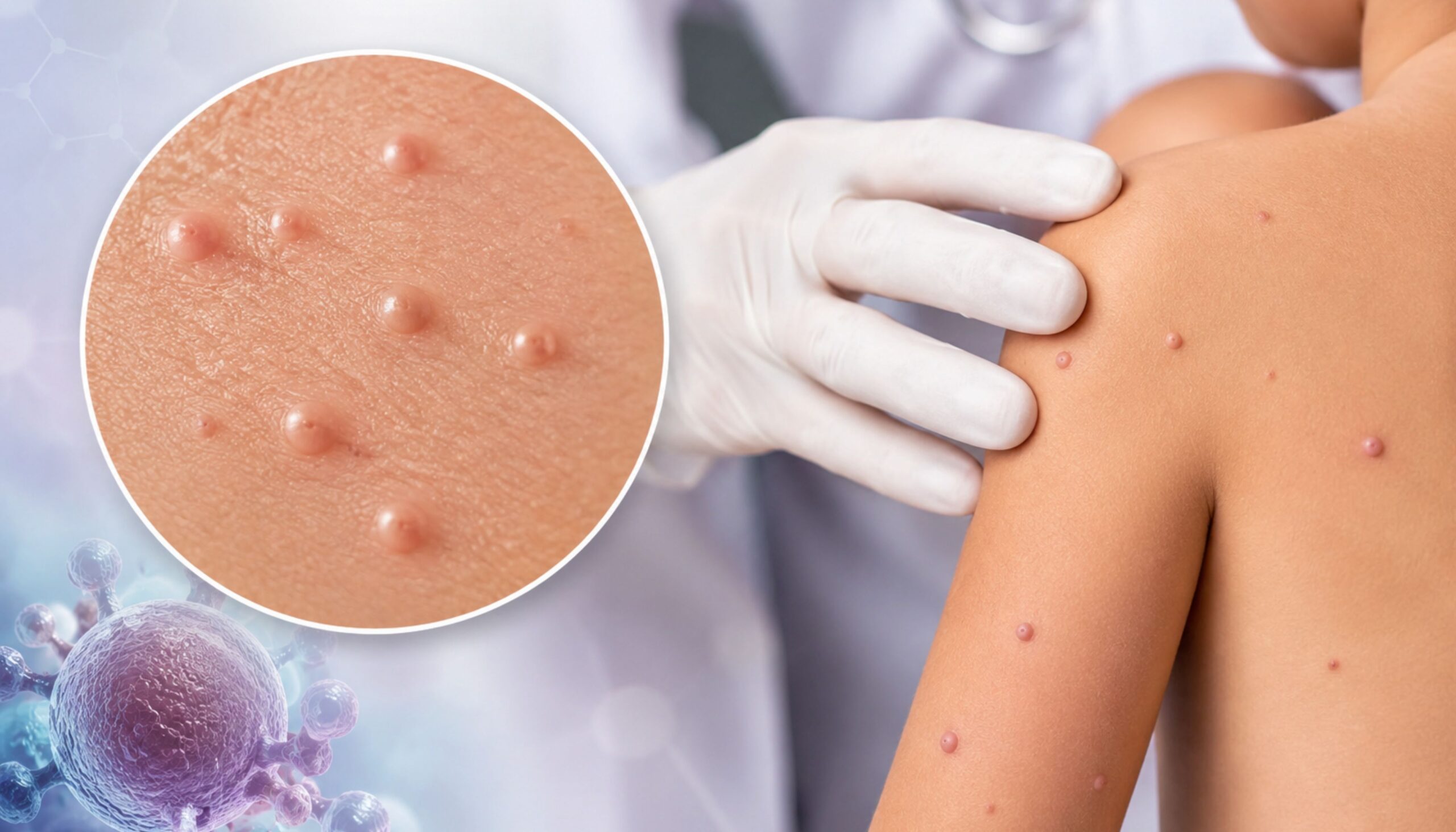
Molluscum contagiosum is a common, mild viral skin infection that causes small, painless, pearl-like bumps on the skin. It is completely treatable and, in most cases, not a cause for serious worry — but because it spreads through skin contact, early diagnosis and proper treatment matter. At SAB Clinic Gurgaon, Dr. Jasdeep Kaur and her team see and treat molluscum contagiosum regularly across all age groups, from children to adults, including its genital presentation, which needs a more confidential and specialised approach.
What is Molluscum Contagiosum?
Molluscum contagiosum is a skin infection caused by a poxvirus (the molluscum contagiosum virus, or MCV). It shows up as small, firm, dome-shaped bumps, usually 2–5 mm wide, with a characteristic dimple or pit at the centre. The bumps are usually flesh-coloured, pink, or pearly white, and are not painful, though they may itch mildly.
It is more common in children, sexually active adults, and people with a weakened immune system, but anyone can get it. In most healthy individuals, molluscum eventually clears on its own — however this can take anywhere from several months to a couple of years, and the bumps can spread to new areas or to other people in the meantime, which is why most dermatologists recommend active treatment rather than waiting it out.
What Causes Molluscum Contagiosum?
Molluscum contagiosum is caused by direct contact with the virus. Common ways it spreads include:
- Skin-to-skin contact with an infected person
- Sharing personal items — towels, razors, clothing, or sports equipment
- Autoinoculation — scratching or touching a bump and then touching another part of your own body spreads it further
- Swimming pools and communal water contact, where the virus can transfer via shared surfaces
- Sexual contact, when the bumps occur in the genital or lower abdominal area (see our detailed section on Genital Molluscum Contagiosum below)
People with eczema or a weakened immune system tend to develop more widespread and stubborn lesions.
Symptoms of Molluscum Contagiosum
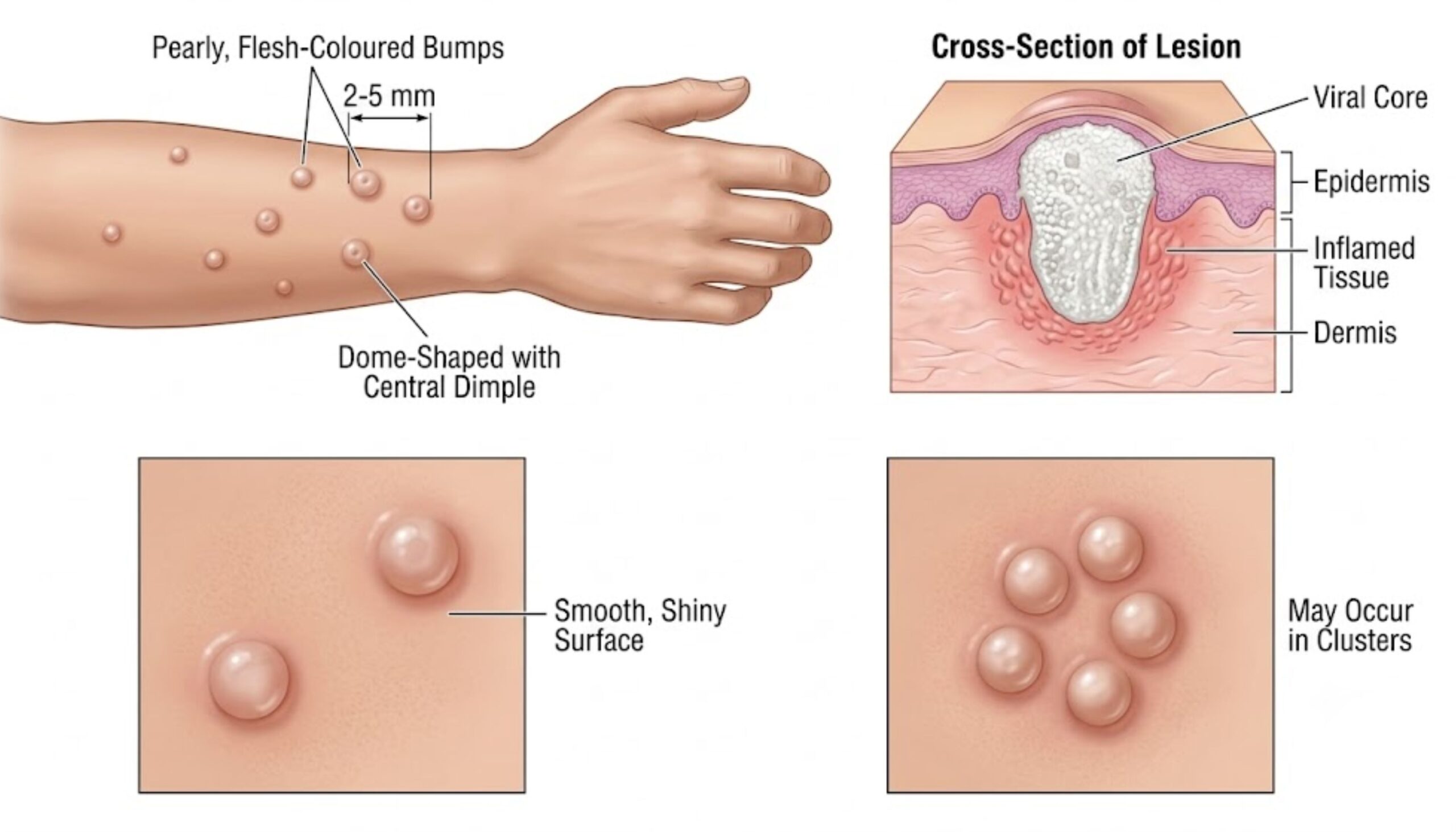
The most recognisable sign is the appearance of small, raised, dome-shaped bumps with a central dimple. Other symptoms include:
- Bumps that are firm, smooth, and usually painless
- Mild redness or irritation around the bumps
- Occasional itching
- Bumps appearing in clusters or spreading in a line where the skin has been scratched
- In some cases, a thick, white, cheese-like core inside the bump
Molluscum can appear anywhere on the body, but is most often seen on the face, neck, armpits, arms, hands, and — in adults, when sexually transmitted — the genital and inner thigh area.
Stages of Molluscum Contagiosum
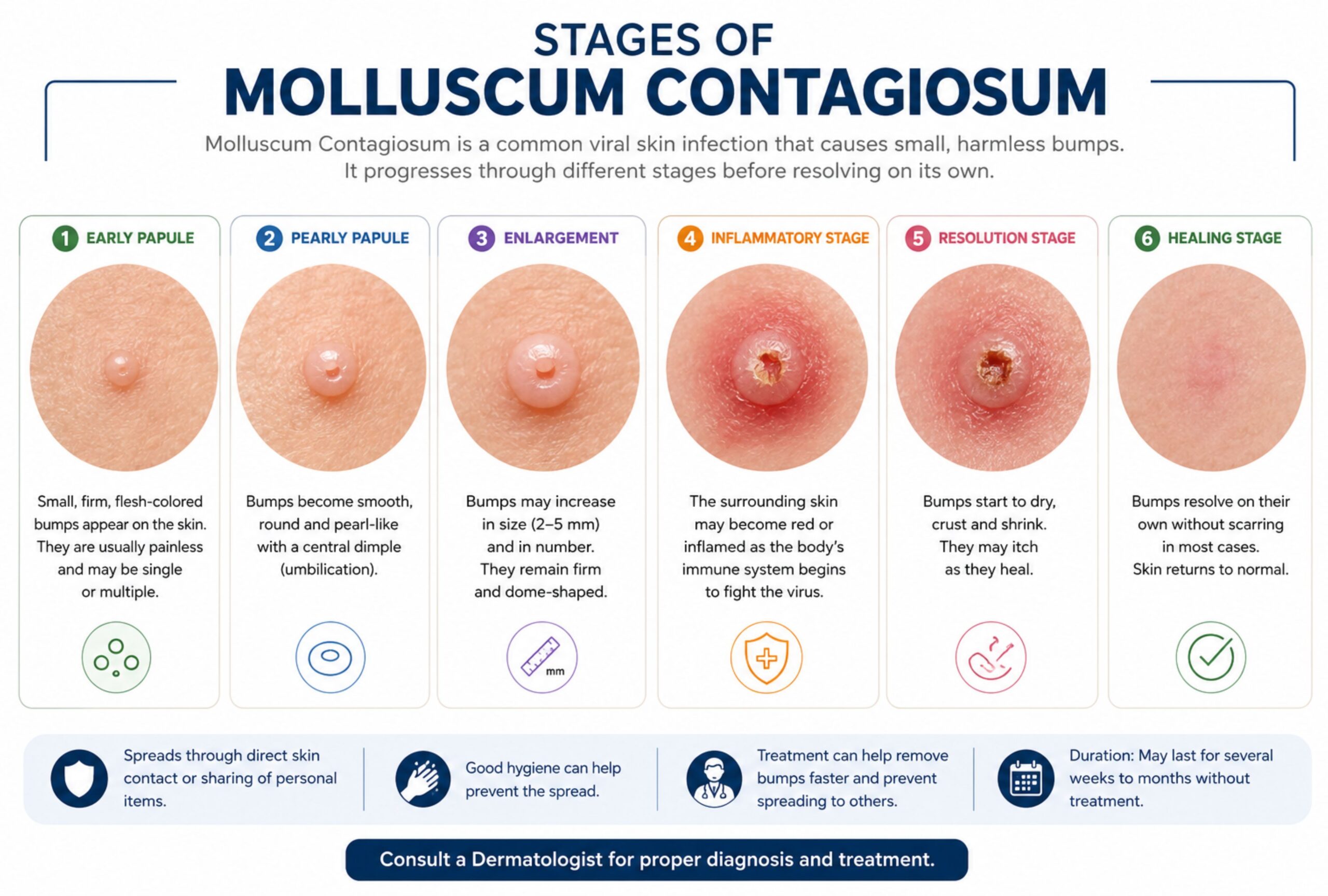
Molluscum lesions typically progress through a few visible stages:
- Early stage: Tiny, pinpoint, flesh-coloured bumps appear, often barely noticeable.
- Growth stage: Bumps enlarge to 2–5 mm, becoming firm and dome-shaped with a visible central dimple.
- Mature stage: The characteristic waxy, pearly appearance is most obvious; the central core may become visible.
- Inflammatory stage: Just before the body’s immune system clears them, some bumps become red, swollen, or slightly tender — this is often a sign that they are resolving, not worsening.
- Resolution: Bumps flatten and disappear, sometimes leaving temporary mild redness or a small scar, especially if scratched or picked.
Because the bumps can look similar to warts, skin tags, or (in the genital area) other skin conditions, a proper clinical diagnosis is important rather than self-diagnosing from pictures alone.
Molluscum Contagiosum: Face, Body & Genital Area
Location matters for both diagnosis and treatment approach:
- On the face: Common in children; needs a gentle removal technique to avoid scarring on visible skin.
- On the body (trunk, arms, legs, armpits): Most common presentation; usually spreads through scratching or shared towels/clothing.
- In the genital area: In sexually active adults, molluscum in the groin, genitals, or inner thighs is usually acquired through sexual contact and needs a confidential, sensitive clinical approach. Read our full section on Genital Molluscum Contagiosum below for specifics on diagnosis and treatment in this area.
Genital Molluscum Contagiosum — A Sexually Transmitted Presentation
Genital molluscum contagiosum is the same virus (MCV) as body or facial molluscum, but the bumps appear on or around the genitals, groin, pubic area, inner thighs, buttocks, or lower abdomen. In sexually active adults, this location is considered one of the sexually transmitted infections (STIs), because the virus most commonly spreads here through direct skin-to-skin genital contact during sexual activity — including contact where no penetration occurs, since the virus only needs skin contact, not fluid exchange, to spread.
How Genital Molluscum Spreads
- Sexual skin-to-skin contact with an infected partner, even without penetrative intercourse
- Autoinoculation from a bump elsewhere on the body (e.g., hands) to the genital area through scratching or touching
- Shared razors or grooming tools used on or near the genital/pubic region
- Rarely, close non-sexual skin contact, though this is less common than in body or facial molluscum
Symptoms of Genital Molluscum
Genital molluscum looks the same as molluscum elsewhere — small, firm, dome-shaped, flesh-coloured or pearly bumps with a central dimple — but appears on the:
- Penis, scrotum, or pubic area in men
- Vulva, labia, or pubic area in women
- Groin folds, inner thighs, lower abdomen, or buttocks in either sex
The bumps are usually painless, though they can become itchy, mildly irritated, or inflamed with friction, shaving, or scratching. Unlike some other STIs, genital molluscum typically does not cause pain, burning during urination, or discharge — if these symptoms are present, they point to a different or coexisting condition and need separate evaluation.
Is Genital Molluscum Always an STI?
Not always. In children, molluscum found near the genital area is usually from ordinary skin contact or autoinoculation (spreading from bumps elsewhere on their own body) and is not a sign of sexual contact. In sexually active adults, however, genital-area molluscum is often — though not exclusively — transmitted sexually, which is why a dermatologist or venereologist will usually take a careful history and may screen for other STIs at the same visit, since molluscum can sometimes occur alongside other sexually transmitted infections.
Why Genital Molluscum Needs Specialised Care
Genital-area skin is more sensitive and prone to irritation, so treatment needs to be gentler and more precise than for body or facial lesions. At SAB Clinic, genital molluscum is managed with the same confidentiality and non-judgemental approach used for any STI-related consultation:
- Careful, private clinical examination to confirm the diagnosis and rule out warts, herpes, syphilis chancres, or other genital skin conditions
- Gentle removal techniques such as fine curettage or cryotherapy, adjusted for sensitive skin, to minimise discomfort and scarring
- Topical options for milder or multiple lesions, chosen carefully since genital skin is more reactive to strong topical agents
- Partner awareness and screening — since genital molluscum is contagious through sexual contact, dermatologists usually advise informing sexual partners and, where appropriate, having them examined too
- Guidance on avoiding spread — including abstaining from sexual contact or using barrier protection until lesions are treated and healed, since condoms reduce but do not fully eliminate transmission risk (the virus can be present on skin not covered by a condom)
When to See a Doctor for Genital Molluscum
Book a confidential consultation promptly if you notice any new bumps in the genital or groin area, especially if you are sexually active. Early treatment reduces the chance of spreading it to a partner and prevents the lesions from increasing in number. Do not attempt to pick, scratch, or self-treat genital bumps at home, as this can worsen irritation, cause secondary infection, or spread the virus to a larger area.
Genital molluscum is common, treatable, and nothing to feel embarrassed about.
Dr. Jasdeep Kaur offers confidential, judgement-free consultations for genital and STI-related skin concerns.
Call/WhatsApp: +91 8586 84 4718 |
Book a Confidential Appointment
Diagnosis
Molluscum contagiosum is usually diagnosed through a simple visual clinical examination by a dermatologist. In uncertain cases, or where the lesions look atypical — particularly in the genital area, where several conditions can look similar — a small skin scraping or biopsy may be done to confirm the diagnosis and rule out warts, herpes, or other skin conditions.
Treatment Options for Molluscum Contagiosum
While molluscum can clear on its own, active treatment reduces spread, discomfort, and duration. At SAB Clinic, treatment is chosen based on the number, location, and size of lesions, and the patient’s age and skin type:
- Cryotherapy: Liquid nitrogen is used to freeze off individual bumps — quick and effective for isolated lesions.
- Curettage: The core of the bump is gently scraped out under local anaesthesia/numbing cream — a fast, in-clinic procedure.
- Topical treatment / molluscum contagiosum treatment cream: Prescription creams (such as those containing potassium hydroxide, tretinoin, or immune-response modifiers) can be applied at home for milder or widespread cases.
- Laser treatment: Used for stubborn, widespread, or cosmetically sensitive areas (like the face), offering precision with minimal scarring.
- Cantharidin application: A blistering agent applied in-clinic that causes the bump to blister and fall off within days.
Your dermatologist will recommend the safest option, particularly for children, pregnant women, and lesions in sensitive areas like the genitals or face.
Home Remedies — What Actually Works
Many people search for home remedies for molluscum contagiosum. It’s important to be clear here: no home remedy has been medically proven to cure molluscum, and picking, scratching, or applying unverified home treatments can spread the virus to new areas or cause scarring and secondary infection. This is especially true in the genital area, where skin is thinner and more sensitive. Basic hygiene — not sharing towels/razors, keeping the area clean and covered, and avoiding scratching — can help reduce spread while you wait for a proper clinical consultation. If you’re considering any home-based approach, please discuss it with your dermatologist first.
Molluscum Contagiosum in Pregnancy
Molluscum is not typically dangerous during pregnancy, but treatment choices need extra care — some topical treatments and procedures are avoided or modified. Always inform your dermatologist if you are pregnant or breastfeeding before starting treatment.
Incubation Period
After exposure to the virus, it typically takes anywhere from 2 weeks to 6 months (average around 2–3 months) for bumps to appear. This long incubation period is one reason molluscum — including the genital form — can spread within a household or between partners before anyone realises it’s present.
When Should You See a Dermatologist?
You should book a consultation if:
- New bumps keep appearing or spreading
- The bumps are in the genital area
- You have a weakened immune system
- Bumps become red, swollen, or painful (possible secondary infection)
- You’re unsure whether it’s molluscum, a wart, or a skin tag
Why Choose SAB Clinic for Molluscum Contagiosum Treatment in Gurgaon?
- Led by Dr. Jasdeep Kaur Malhotra (MBBS, DDVL) — 15+ years of dermatology experience
- Rated 4.8/5 from 1,013+ Google reviews
- Confidential, judgement-free consultations, including for genital-area and STI-related concerns
- In-clinic procedures: cryotherapy, curettage, laser, and topical treatment plans
- Conveniently located at H.N. 7311, GF & Basement, Opp. Supermart-2, DLF Phase 4, Sector 43, Gurugram, Haryana 122009
Frequently Asked Questions
Is molluscum contagiosum dangerous?
No, molluscum contagiosum is generally harmless and not dangerous. It is a benign viral skin infection. The main concerns are its contagious nature and the possibility of spreading to new areas or other people, which is why timely treatment is recommended.
Can molluscum contagiosum go away on its own?
Yes, in healthy individuals it often clears on its own within 6 months to 2 years. However, since it’s contagious and can spread during this time, most dermatologists recommend treatment to speed up resolution and prevent further spread.
Is molluscum contagiosum an STD?
Molluscum can spread through any skin-to-skin contact, not only sexual contact. However, when bumps appear in the genital area of a sexually active adult, it is often (though not always) transmitted sexually. A dermatologist can help determine the likely source and appropriate treatment.
What is genital molluscum contagiosum and how is it different from other genital infections?
Genital molluscum contagiosum refers to molluscum bumps appearing on or around the genitals, groin, or inner thighs. Unlike many other STIs, it usually doesn’t cause pain, discharge, or burning — it presents as small, painless, dome-shaped bumps with a central dimple. Because it can resemble genital warts or other conditions, clinical examination is important to confirm the diagnosis.
Can genital molluscum spread to a partner even with condom use?
Condoms reduce the risk but don’t fully eliminate it, since molluscum spreads through skin-to-skin contact and the virus can be present on genital or groin skin not covered by a condom. Avoiding sexual contact until lesions are treated and healed, and having partners examined, is the safest approach.
How long is the incubation period for molluscum contagiosum?
The incubation period typically ranges from 2 weeks to 6 months after exposure, with symptoms most commonly appearing around 2–3 months after contact with the virus.
What cream is used to treat molluscum contagiosum?
Dermatologists may prescribe topical treatments such as potassium hydroxide solution, tretinoin cream, or immune-modulating creams, depending on the number and location of lesions. These should only be used under medical guidance, as incorrect use can irritate the skin — especially in the genital area.
Can molluscum contagiosum occur during pregnancy?
Yes, it can occur during pregnancy. It isn’t typically harmful to the pregnancy itself, but treatment options are adjusted for safety — always inform your dermatologist if you’re pregnant or breastfeeding.
How is molluscum contagiosum different from warts?
Both are viral skin conditions but caused by different viruses — molluscum by a poxvirus, warts by HPV. Molluscum bumps are usually smooth, dome-shaped, with a central dimple, while warts tend to have a rough, textured surface. A dermatologist can distinguish between them on examination.
Does molluscum contagiosum leave scars?
Typically no, if left untouched and treated properly. However, scratching, picking, or improper home treatment can lead to scarring or secondary bacterial infection.