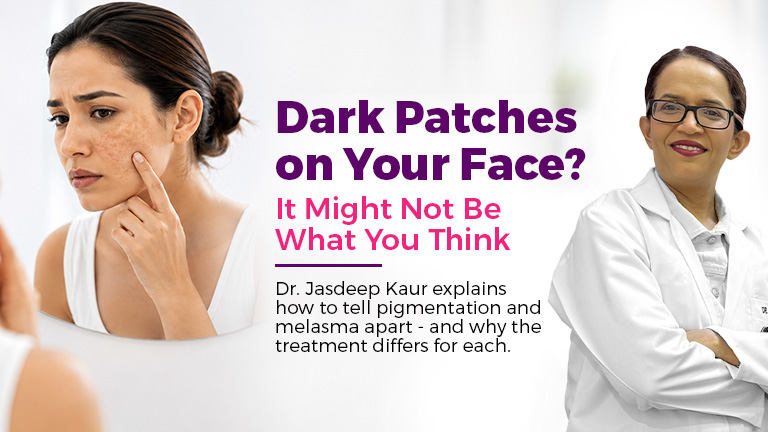
You’ve noticed dark patches on your face and assumed it’s just sun damage – but months of sunscreen and brightening creams later, the patches are still there, maybe even darker. This is one of the most common mix-ups we see at SAB Clinic in Gurgaon: mistaking pigmentation vs melasma, two conditions that look similar on the surface but behave very differently underneath. Treating melasma like ordinary pigmentation – or vice versa – often means months of ineffective treatment and, sometimes, worsening of the condition. This guide breaks down exactly how to tell them apart and why getting the diagnosis right matters more than any product you put on your skin.
What Is Pigmentation?
Pigmentation, or hyperpigmentation, is a general term for any darkening of the skin caused by excess melanin production. It can appear as sun spots, age spots, or dark marks left behind after acne, injury, or inflammation (post-inflammatory hyperpigmentation). Pigmentation is usually localized, has defined edges, and is typically triggered by a specific cause – sun exposure, a healed breakout, or skin trauma.
What Is Melasma?
Melasma is a specific type of pigmentation, but with a different underlying mechanism. It appears as symmetrical, often larger patches – commonly on the cheeks, forehead, upper lip, and chin – and is strongly linked to hormonal activity, sun exposure, and genetic predisposition. Unlike ordinary pigmentation, melasma tends to be more stubborn, more prone to recurrence, and more sensitive to triggers like heat and hormonal changes, not just UV light.
Causes
Pigmentation:
Prolonged sun exposure (UV-induced melanin production)
Acne marks and post-inflammatory pigmentation
Skin injuries, burns, or irritation
Aging (age spots/lentigines)
Certain medications causing photosensitivity
Melasma:
Hormonal fluctuations (pregnancy, birth control, thyroid conditions)
Genetic predisposition
Sun and heat exposure (a stronger trigger than in ordinary pigmentation)
Certain cosmetic products that irritate the skin
Chronic, low-grade inflammation
Symptoms
Pigmentation:
Small to medium spots with defined borders
Often localized to one area (where acne or injury occurred)
Uniform brown or dark brown color
Doesn’t typically worsen with heat
Melasma:
Larger, symmetrical patches, often on both cheeks or across the forehead
Blotchy, less defined borders
Can range from light brown to greyish-brown
Tends to darken with sun, heat, and hormonal shifts
Often fluctuates in intensity over time
Who Is Most at Risk?
Pigmentation:
Anyone with frequent sun exposure or a history of acne
Occupations involving outdoor work
Individuals with darker skin tones (Fitzpatrick III-V), who are more prone to visible post-inflammatory marks
Melasma:
Women, particularly during pregnancy or while on hormonal contraception
Individuals aged 20-40
Those with a family history of melasma
People with Fitzpatrick skin types III-V, common across Indian skin tones
Individuals with thyroid or other hormonal conditions
Types
| Type | Category | Key Feature |
|---|---|---|
| Post-Inflammatory Hyperpigmentation | Pigmentation | Follows acne or skin injury |
| Sun-Induced Pigmentation (Lentigines) | Pigmentation | Caused by prolonged UV exposure |
| Epidermal Melasma | Melasma | Surface-level, responds well to topical treatment |
| Dermal Melasma | Melasma | Deeper pigment, more resistant to treatment |
| Mixed Melasma | Melasma | Combination of epidermal and dermal, most common type |
Diagnosis at SAB Clinic
Because pigmentation and melasma require different treatment approaches, an accurate diagnosis is the most important first step. At SAB Clinic, Dr. Jasdeep Kaur typically evaluates:
Detailed history – onset, triggers (sun, hormonal changes, pregnancy), and pattern
Visual and dermoscopic examination – to assess pigment distribution and borders
Wood’s lamp examination – helps determine whether pigmentation is epidermal, dermal, or mixed, which directly affects treatment planning
Hormonal history review – particularly for women with symmetrical facial patches
This distinction between pigmentation types is critical – treating dermal melasma with treatments designed for surface pigmentation often leads to disappointing results or irritation.
Treatment Options
Topical Depigmenting Agents
How it works: Ingredients like tranexamic acid, kojic acid, and niacinamide inhibit excess melanin production.
Best candidates: Both pigmentation and epidermal melasma patients.
Benefits: Gradual, even lightening with consistent use.
Procedure: Applied as part of a daily skincare routine.
Recovery: None.
Side effects: Mild irritation in some cases.
Expected results: Visible improvement in 8-12 weeks.
Sessions: Ongoing daily use.
Success rate: Good for pigmentation and mild melasma; slower for dermal melasma.
Downtime: None.
Chemical Peels
How it works: Controlled exfoliation removes pigmented surface cells and promotes even skin tone.
Best candidates: Pigmentation and epidermal-dominant melasma.
Benefits: Faster visible results than topical treatment alone.
Procedure: In-clinic application of a medical-grade peel.
Recovery: Mild peeling for 2-4 days.
Side effects: Temporary redness, rare pigmentation flare-up if not managed carefully in melasma-prone skin.
Expected results: Noticeable improvement after 3-5 sessions.
Sessions: 4-6, spaced 3-4 weeks apart.
Success rate: Good, though melasma requires more cautious protocols than pigmentation.
Downtime: 2-4 days.
Laser & Light-Based Treatments
How it works: Targets excess melanin using controlled light energy.
Best candidates: Primarily pigmentation and sun spots; used cautiously in melasma due to relapse risk.
Benefits: Effective for well-defined pigmentation.
Procedure: In-clinic laser session, tailored to skin type.
Recovery: Mild redness for 1-2 days.
Side effects: Risk of rebound pigmentation if used inappropriately on melasma-prone skin – patient selection matters.
Expected results: Visible lightening after 2-4 sessions for pigmentation.
Sessions: Varies by condition and skin response.
Success rate: High for pigmentation; requires careful case selection for melasma.
Downtime: 1-2 days.
Maintenance Therapy for Melasma
How it works: Ongoing low-dose topical treatment combined with strict sun protection to prevent recurrence.
Best candidates: Melasma patients after initial improvement.
Benefits: Reduces relapse, which is common with melasma specifically.
Procedure: Physician-guided long-term topical regimen.
Recovery: None.
Side effects: Minimal with proper guidance.
Expected results: Sustained improvement with consistent adherence.
Sessions: Continuous, monitored periodically.
Success rate: Essential for long-term melasma control.
Downtime: None.
Comparison Table
| Treatment | Best For | Sessions | Recovery | Results |
|---|---|---|---|---|
| Topical Depigmenting Agents | Pigmentation, epidermal melasma | Ongoing | None | 8-12 weeks |
| Chemical Peels | Pigmentation, epidermal melasma | 4-6 | 2-4 days | 3-5 sessions |
| Laser Treatment | Pigmentation (selective for melasma) | Varies | 1-2 days | 2-4 sessions |
| Maintenance Therapy | Melasma relapse prevention | Ongoing | None | Sustained |
Why Combination Treatments Often Work Better
Because pigmentation and melasma often overlap – a patient may have sun-induced spots alongside hormonal melasma – a single treatment rarely addresses everything. Dr. Jasdeep Kaur typically combines topical therapy with in-clinic treatments like peels, while reserving laser for cases where pigmentation is clearly defined and stable. For melasma specifically, combination therapy paired with strict photoprotection is usually more effective than any single treatment alone, given how prone melasma is to recurrence.
Recovery Timeline
Day 1: No downtime for topical treatment; mild redness possible after peels or laser.
Week 1: Skin adjusting to topical actives; peeling settles after peel sessions.
Month 1: Early lightening visible in pigmentation cases.
3 Months: Noticeable improvement in both pigmentation and melasma with consistent treatment.
6 Months: Sustained results with maintenance therapy, particularly important for melasma.
Before & After Expectations
Pigmentation generally responds faster and more predictably to treatment than melasma, which tends to improve gradually and requires ongoing maintenance to prevent recurrence. Both conditions respond differently from patient to patient depending on skin type, triggers, and consistency with sun protection. SAB Clinic does not guarantee complete or permanent clearance, particularly for melasma, which is known to relapse even after successful treatment.
Aftercare Tips
Apply broad-spectrum sunscreen (SPF 30+) every single day, rain or shine
Reapply sunscreen every 3-4 hours if outdoors
Wear a wide-brimmed hat or seek shade during peak sun hours
Avoid skipping topical maintenance treatment once patches lighten
Be cautious with heat exposure (saunas, hot yoga) if you have melasma
Avoid picking at acne to prevent new pigmentation
Use gentle, non-irritating skincare products
Keep follow-up appointments to monitor progress and adjust treatment
Risks & Possible Side Effects
Common: Mild irritation from topical actives, temporary redness or peeling after in-clinic treatments.
Rare: Rebound pigmentation, particularly if laser is used inappropriately on melasma-prone skin.
When to seek medical help: Sudden darkening after treatment, persistent irritation, or unusual skin reactions should be evaluated promptly rather than continuing treatment independently.
Prevention Tips
Make daily sunscreen non-negotiable, regardless of weather or season
Treat acne early to reduce risk of post-inflammatory pigmentation
Monitor hormonal changes (pregnancy, contraception) that may trigger melasma
Avoid harsh, unregulated skin-lightening products sold without medical guidance
Schedule periodic dermatologist check-ins, especially if you have a family history of melasma
When Should You See a Doctor?
Dark patches don’t respond to over-the-counter products after several weeks
Pigmentation is spreading, symmetrical, or worsening with sun/heat exposure
You’re unsure whether your dark spots are pigmentation or melasma
Patches appeared during pregnancy or after starting hormonal contraception
Pigmentation is accompanied by other hormonal symptoms
Why Choose SAB Clinic?
SAB Clinic is led by Dr. Jasdeep Kaur, a dermatologist with over 20 years of experience diagnosing and treating pigmentation and melasma across the Indian skin tones most prone to these conditions. The clinic uses Wood’s lamp evaluation and dermoscopic assessment to correctly distinguish pigmentation types before recommending treatment, using FDA-approved protocols tailored to each patient rather than generic brightening regimens.
Frequently Asked Questions
How can I tell if I have pigmentation or melasma?
Pigmentation typically appears as smaller, well-defined spots linked to a specific cause like sun exposure or acne, while melasma appears as larger, symmetrical, blotchy patches usually on the cheeks, forehead, or upper lip, often linked to hormonal changes. A dermatologist can confirm the distinction using a Wood’s lamp examination.
Is melasma a type of pigmentation?
Yes, melasma is technically a form of hyperpigmentation, but it has a distinct hormonal and genetic basis that makes it behave differently from ordinary sun spots or acne marks, both in appearance and in how it responds to treatment.
Why does melasma keep coming back even after treatment?
Melasma is highly sensitive to triggers like sun exposure, heat, and hormonal fluctuations, which means even after successful treatment, these triggers can reactivate melanin production. Consistent sun protection and maintenance therapy are essential to reduce the frequency of recurrence.
Can pigmentation turn into melasma?
No, pigmentation and melasma are different conditions with different mechanisms, though they can occur together on the same skin. Ordinary pigmentation doesn’t “become” melasma, but a patient can certainly have both conditions simultaneously.
Does pregnancy cause melasma?
Yes, pregnancy is one of the most common triggers for melasma due to hormonal shifts, which is why it’s sometimes referred to as the “mask of pregnancy.” It often fades after childbirth but can persist or recur with future hormonal changes.
Is laser treatment safe for melasma?
Laser treatment requires caution in melasma because inappropriate use can trigger rebound pigmentation. It’s more commonly and safely used for well-defined sun-induced pigmentation, while melasma often responds better to topical therapy and carefully selected peels.
How long does it take to see results for pigmentation vs melasma?
Pigmentation generally shows visible improvement within 8-12 weeks of consistent treatment, while melasma tends to improve more gradually and often requires ongoing maintenance rather than a fixed treatment endpoint.
Can sunscreen alone treat melasma?
Sunscreen alone won’t clear existing melasma, but it’s the single most important factor in both treatment success and preventing recurrence. Without consistent sun protection, other treatments are significantly less effective.
What triggers melasma besides sun exposure?
Heat, hormonal contraception, pregnancy, thyroid conditions, and certain skincare products can all trigger or worsen melasma, which is why identifying personal triggers is an important part of managing the condition long-term.
Are pigmentation and melasma more common in Indian skin tones?
Yes, both conditions are more visibly prominent in Fitzpatrick skin types III-V, which are common across Indian skin tones, making accurate diagnosis and skin-tone-appropriate treatment especially important to avoid worsening pigmentation.
Can post-acne marks be mistaken for melasma?
Yes, post-inflammatory hyperpigmentation from acne can sometimes resemble melasma, especially if breakouts occurred in similar facial areas. A dermatologist can distinguish between the two based on pattern, symmetry, and examination findings.
Is melasma permanent?
Melasma isn’t necessarily permanent, but it is chronic and relapse-prone, meaning most patients need an ongoing management approach rather than a one-time treatment, particularly around known triggers like sun and hormonal changes.
Final Call-to-Action
If you’re unsure whether the dark patches on your skin are pigmentation or melasma, guessing can cost you months of ineffective treatment. Dr. Jasdeep Kaur and the team at SAB Clinic can accurately diagnose your condition and build a treatment plan suited to exactly what your skin needs. Book a consultation at SAB Clinic, Gurgaon, and get clarity on your skin instead of another trial-and-error routine.
One thought on “Pigmentation vs Melasma: How to Tell the Difference”