
Ingrown Toenail Removal & Fungal Nail Surgery in Gurgaon
Painless, dermatologist-led nail surgery for ingrown and fungal nails at Skin Aura Brain & Spine Neuro Centre, DLF Phase 4, Gurugram.
An ingrown or fungal toenail can turn something as simple as walking or wearing shoes into a daily source of pain. Because these problems rarely resolve on their own once they reach an advanced stage, most patients eventually need proper dermatological care. At Skin Aura Brain & Spine Neuro Centre in DLF Phase 4, Gurugram, Dr. Jasdeep Kaur Malhotra performs minor nail surgery under local anaesthesia so patients get permanent relief from ingrown toenails and stubborn fungal nail infections, with minimal discomfort and a quick return to their normal routine. In this guide, we explain what causes these conditions, when surgery becomes necessary, what the procedure involves, and what you can expect during recovery.
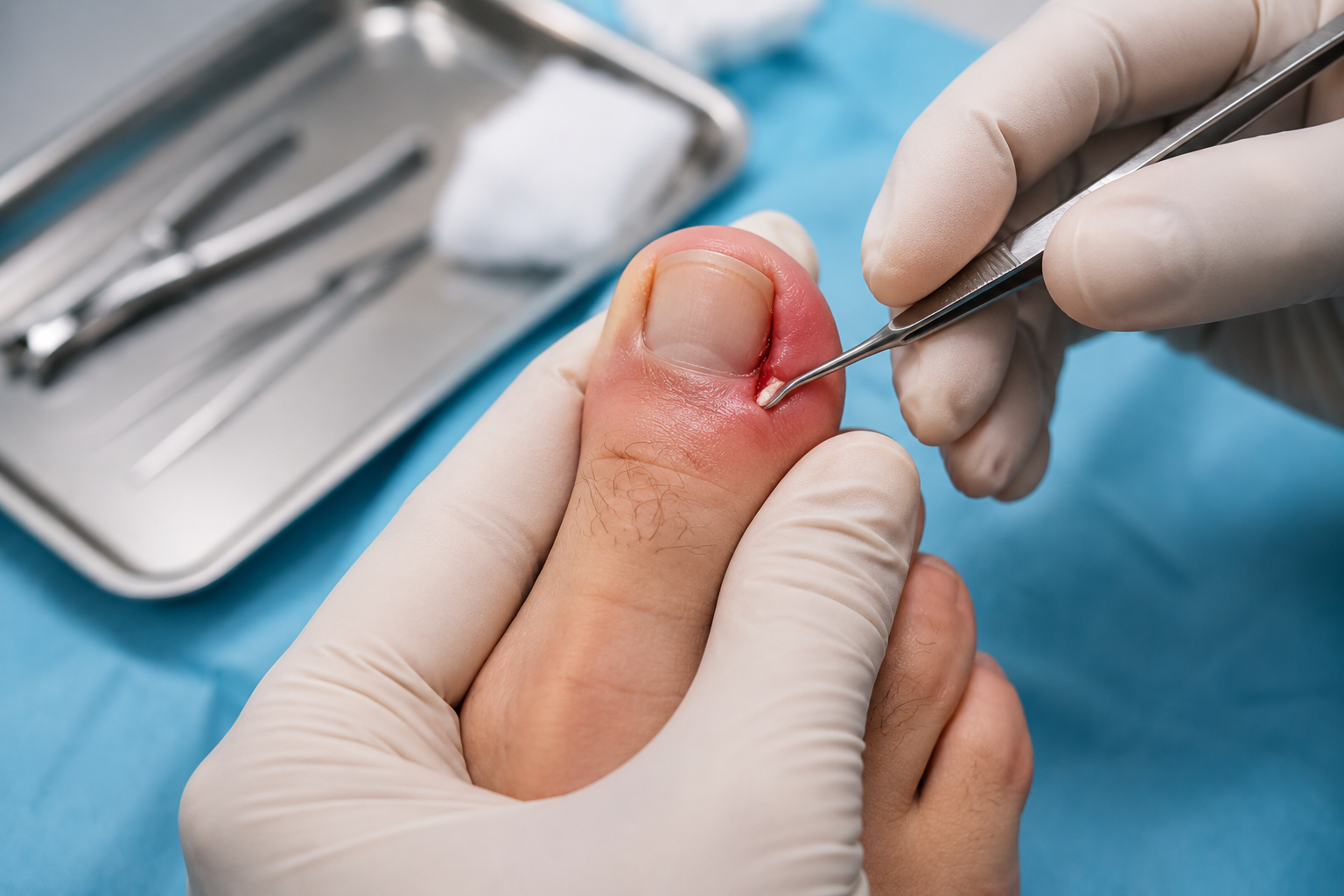
Nail surgery consultation at Skin Aura, DLF Phase 4, Gurugram
What Is an Ingrown Toenail?
An ingrown toenail (medically called onychocryptosis) occurs when the corner or side of the nail — most often on the big toe — grows into the surrounding skin instead of straight out. As a result, the toe develops redness, swelling, and tenderness, and in many cases a low-grade infection sets in with pus or discharge if it goes untreated. This is one of the most common foot problems dermatology clinics in Gurgaon see, and tight footwear, incorrect nail trimming, injury, or naturally curved nails typically make it worse. For a general overview of causes and home care, the American Academy of Dermatology’s ingrown toenail guide is a helpful reference.
Common Causes
Tight or narrow shoes, cutting nails too short or in a curved shape, toe injury, fungal thickening of the nail, and genetically curved nail plates.
Typical Symptoms
Pain and tenderness along the nail edge, redness, swelling, warmth around the toe, and sometimes pus or a foul smell if infected.
When Is Ingrown Toenail Removal Necessary?
Warm-water soaks, proper trimming, and topical antiseptics can often manage mild ingrown toenails at home. However, if the ingrown nail keeps recurring, causes persistent pain, or leads to an active infection, dermatologists recommend a minor surgical procedure to remove the offending part of the nail and stop it from growing back into the skin. Because diabetics and people with poor circulation face a higher risk of complications, we generally advise them to seek treatment early rather than wait for the condition to worsen.
Types of Nail Surgery We Perform
| Procedure | What It Involves | Best Suited For |
|---|---|---|
| Partial Nail Avulsion | Removal of only the ingrown edge/corner of the nail, followed by chemical or electrocautery treatment of the nail root to prevent regrowth | Localised ingrown toenail on one side |
| Total Nail Avulsion | Complete removal of the nail plate and, if needed, the nail bed | Severely thickened, deformed, or badly fungal-infected nails |
| Chemical Matricectomy (Phenolisation) | A controlled chemical agent is applied to the nail root to stop regrowth at that edge, minimising recurrence | Recurrent ingrown toenails |
| Fungal Nail Removal | Removal of the infected nail portion combined with antifungal therapy to allow healthy regrowth | Onychomycosis (fungal nail infection) unresponsive to medication |
What to Expect: Step-by-Step
1. Consultation & Assessment
Dr. Jasdeep Kaur examines the nail and toe to confirm the diagnosis and decide the right technique for your case.
2. Local Anaesthesia
We numb the toe completely, so the procedure itself feels virtually painless.
3. Nail Removal
The doctor removes the affected portion — or, where needed, the entire nail — along with any infected tissue.
4. Root Treatment
Where required, we treat the nail root with a chemical agent or cautery to reduce the chances of recurrence.
5. Dressing & Aftercare
We bandage the toe and give you clear aftercare and dressing-change instructions.
6. Follow-Up
A short review visit ensures the area is healing well and the new nail is growing back healthy.
Fungal Nail Removal Treatment

Fungal nail infection (onychomycosis) causes the nail to thicken, discolour, and crumble, usually starting at the edges and spreading inward. Because it thrives in warm, moist environments, it’s especially common among people who wear closed shoes for long hours, use public showers or pools, or have a family history of nail fungus. For instance, mild cases usually respond well to oral or topical antifungal medication. In long-standing or severe infections, however, where the nail has become thick and distorted, we recommend nail surgery to remove the affected nail so a healthy nail can grow back in its place. Mayo Clinic’s overview of nail fungus (onychomycosis) covers the condition in more clinical detail.
Recovery & Aftercare
Nail surgery at Skin Aura is a minor, walk-in walk-out procedure, so most patients resume light daily activity the same day. You may feel mild soreness for a few days, but the prescribed medication manages this easily. A toenail typically takes several months to fully regrow, which is a normal part of healing. Throughout recovery, our team advises you on wound care, footwear, and follow-up visits so that healing stays smooth and the chance of recurrence stays low.
Your Nail Surgery Specialist in Gurgaon

Dr. Jasdeep Kaur Malhotra — Dermatologist, Venereologist & Aesthetic Specialist with 15+ years of clinical experience, based at Skin Aura Brain & Spine Neuro Centre, DLF Phase 4, Gurugram. Rated 4.8/5 by over 1,000 verified patient reviews for skin, nail, and cosmetic dermatology care.
Frequently Asked Questions
Is ingrown toenail removal painful?
No. The procedure is performed under local anaesthesia, so the toe is completely numb during surgery. Mild soreness for a couple of days afterward is normal and manageable with prescribed medication.
How long does nail surgery take?
Most ingrown toenail or fungal nail removal procedures take about 20 to 45 minutes, depending on how much of the nail needs to be treated.
Will the ingrown toenail come back after surgery?
When the nail root is treated with chemical matricectomy or cautery during the procedure, recurrence at that same edge is significantly reduced, though in rare cases regrowth can occur and may need a repeat procedure.
How long is the recovery period?
Most patients return to normal daily activity within a day or two. The nail itself takes a few months to fully grow back, which is expected and part of normal healing.
Can a fungal nail be treated without removing the entire nail?
Yes, mild to moderate fungal nail infections often respond to oral or topical antifungal treatment alone. Nail removal is generally recommended only when the infection is severe, the nail is badly thickened or distorted, or medication alone hasn’t worked.
Is nail surgery safe for diabetics?
Diabetics can undergo nail surgery, but require careful pre-procedure evaluation since diabetes can affect wound healing. Dr. Jasdeep Kaur assesses each diabetic patient individually and recommends the safest approach.
Where can I get ingrown toenail removal near me in Gurgaon?
Skin Aura Brain & Spine Neuro Centre in DLF Phase 4, Gurugram offers dermatologist-led ingrown toenail and fungal nail removal, easily accessible from Sector 43, Golf Course Road, Sushant Lok, South City, and other parts of Delhi NCR.
Related Treatments
Nail Fungal Infection Treatment ·
Mole, Wart & Skin Tag Removal ·
Cyst & Lipoma Removal ·
About Dr. Jasdeep Kaur
Struggling with an Ingrown or Fungal Toenail?
Book a consultation with Dr. Jasdeep Kaur Malhotra at Skin Aura, DLF Phase 4, Gurugram.