10 Signs You Need a Dermatologist | skin clinic in Gurgaon
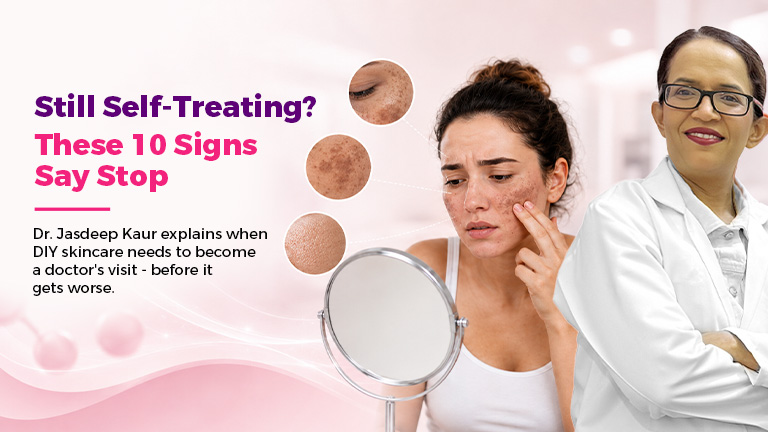
There’s a moment almost everyone with a skin concern reaches – you’ve tried the serum your friend recommended, the home remedy from Instagram, and the over-the-counter cream from the pharmacy, and nothing is working. At what point does self-treating stop being reasonable and start being risky? At SAB Clinic in Gurgaon, Dr. Jasdeep Kaur sees this pattern constantly: patients who waited months, sometimes years, before finally getting a professional diagnosis for something that could have been treated far more easily earlier on. This guide covers the signs you should see a dermatologist instead of continuing to self-treat, so you know exactly when it’s time to stop guessing.
Why Self-Treating Isn’t Always the Safe Choice
Self-treating minor, short-term skin issues is often fine – a bit of dryness or an occasional breakout doesn’t always need a doctor. The problem starts when a condition is persistent, worsening, or doesn’t match what over-the-counter products are designed to treat. Many skin conditions look similar on the surface but have very different underlying causes, and treating the wrong one can delay proper care or make the condition harder to treat later.
Common Reasons People Delay Seeing a Dermatologist
Assuming the issue will resolve on its own
Believing home remedies are “safer” than medical treatment
Cost concerns before understanding actual treatment needs
Embarrassment about visible skin conditions
Lack of awareness that a condition needs professional diagnosis
Success with unrelated skin issues in the past, leading to overconfidence
The 10 Signs You Should See a Dermatologist
1. The Problem Has Lasted More Than 2-3 Weeks
If a rash, breakout, or irritation hasn’t improved despite consistent home care for several weeks, it’s likely not something over-the-counter products are designed to resolve.
2. It’s Getting Worse, Not Better
Spreading redness, increasing pain, or a condition that’s visibly progressing despite treatment is a clear signal to stop self-treating and get an evaluation.
3. You’re Dealing with a New or Changing Mole
Any mole that changes in size, shape, color, or border – or a new mole that looks different from others – should be examined promptly rather than monitored indefinitely at home.
4. There’s Pain, Swelling, or Pus
These are signs of possible infection, which typically needs prescription treatment rather than home remedies or over-the-counter creams.
5. You’ve Tried Multiple Products Without Results
Cycling through several products without improvement usually means the underlying cause hasn’t been correctly identified – a dermatologist can diagnose what’s actually happening.
6. The Condition Is Affecting Your Confidence or Daily Life
Persistent acne, visible scarring, or chronic skin issues that affect how you feel about showing up in daily life are worth addressing properly rather than managing indefinitely.
7. You Have a Family History of Skin Cancer or Serious Skin Conditions
Genetic risk factors mean certain symptoms that might seem minor in someone else warrant a professional check for you specifically.
8. Your Skin Reacts Unusually to Common Products
Sudden sensitivity, burning, or allergic-looking reactions to products you’ve used before can indicate an underlying skin barrier issue that needs proper evaluation.
9. You Notice Symptoms Beyond the Skin
Skin issues accompanied by fatigue, joint pain, fever, or other systemic symptoms may point to a condition connected to internal health, not just the skin surface.
10. You’re Using Prescription-Strength Products Without Guidance
Using leftover prescription creams, borrowed medication, or high-strength actives without professional guidance can worsen certain conditions or mask symptoms that need proper diagnosis.
What Happens During a Dermatologist Consultation at SAB Clinic
When you visit SAB Clinic, Dr. Jasdeep Kaur’s evaluation typically includes:
Detailed history – duration, triggers, and previous treatments tried
Visual and dermoscopic examination – close inspection of the affected area
Relevant testing (if needed) – allergy testing, skin scraping, or biopsy for specific conditions
Personalized treatment plan – based on the actual diagnosis, not generic assumptions
This structured approach is what identifies conditions that look similar on the surface but need very different treatments.
Conditions Often Misdiagnosed Through Self-Treatment
| Assumed Issue | Often Actually | Why It Matters |
|---|---|---|
| Just dry skin | Eczema or contact dermatitis | Needs targeted anti-inflammatory treatment |
| Regular acne | Hormonal acne or folliculitis | Requires different treatment approach |
| Allergic reaction | Fungal infection | Antihistamines won’t resolve fungal issues |
| Age spot | Early pigmentation disorder or lesion | May need monitoring or biopsy |
| Stress rash | Psoriasis or autoimmune-linked condition | Needs long-term management plan |
Risks of Prolonged Self-Treatment
Delayed diagnosis of conditions that are easier to treat early
Worsening of the underlying condition
Skin barrier damage from repeated product trial-and-error
Increased risk of scarring or pigmentation from untreated inflammation
Higher treatment cost and longer recovery once finally addressed
When Home Remedies Are Genuinely Fine
Not every skin concern needs a dermatologist immediately. Mild, short-term dryness, occasional single breakouts, or minor irritation from a new product often resolve on their own with basic care. The key difference is duration and severity – if basic care isn’t working within a few weeks, or the issue is worsening, that’s the signal to escalate to professional care.
Why Choose SAB Clinic?
SAB Clinic is led by Dr. Jasdeep Kaur, a dermatologist with over 20 years of experience diagnosing and treating a wide range of skin conditions across Indian skin types. The clinic focuses on accurate diagnosis before treatment, using FDA-approved protocols and evidence-based care rather than trial-and-error. Patients receive a clear explanation of their condition along with a personalized treatment plan and follow-up support.
Frequently Asked Questions
How do I know if my skin problem needs a dermatologist or will heal on its own?
If a skin issue hasn’t improved within 2-3 weeks of basic care, is worsening, or comes with pain, swelling, or spreading, it’s a sign that professional evaluation is needed rather than continued home treatment.
Is it bad to try home remedies before seeing a dermatologist?
Not necessarily, for mild and short-term issues. The concern arises when home remedies are used for weeks or months without improvement, delaying diagnosis of a condition that may need targeted medical treatment.
What skin symptoms should never be self-treated?
Symptoms like a changing mole, signs of infection (pus, spreading redness, fever), sudden severe allergic reactions, or symptoms accompanied by systemic signs like fatigue or joint pain should always be evaluated by a dermatologist rather than self-treated.
Can over-the-counter products make a skin condition worse?
Yes, using the wrong product for a misdiagnosed condition – such as treating a fungal infection with a steroid cream – can worsen the underlying issue or mask symptoms, making later diagnosis more difficult.
How often should I get a mole or skin check even if nothing seems wrong?
People with a family history of skin cancer or a high number of moles are often advised to get periodic skin checks, while others should get an evaluation whenever they notice a new or changing mole rather than waiting for a routine visit.
Why do some skin conditions look similar but need different treatments?
Many skin conditions share visual symptoms like redness, itching, or bumps, but have entirely different underlying causes – from fungal infections to autoimmune conditions – which is why an accurate diagnosis is essential before choosing a treatment.
Is it normal for acne treatment to take a long time to show results?
Some improvement is expected within 6-8 weeks of appropriate treatment; however, if there’s no change at all despite consistent use, it may indicate the treatment doesn’t match the specific type of acne, warranting a professional reassessment.
Can stress-related skin issues be treated without a dermatologist?
Mild, occasional stress-related breakouts may improve with better sleep and stress management, but persistent or worsening flare-ups often indicate an underlying condition like psoriasis or eczema that benefits from professional treatment.
What should I bring to my first dermatologist appointment?
It helps to bring a list of products you’ve already tried, how long you’ve had the issue, any relevant family history, and photos if the condition fluctuates, so the dermatologist has a complete picture during diagnosis.
Are all skin conditions treatable with the right diagnosis?
Most skin conditions can be effectively managed or significantly improved with an accurate diagnosis and appropriate treatment, though some chronic conditions require ongoing management rather than a one-time cure.
Final Call-to-Action
If you’ve been self-treating a skin concern for weeks without real improvement, it may be time to get an actual diagnosis instead of trying another product. Dr. Jasdeep Kaur and the team at SAB Clinic can help identify exactly what’s happening with your skin and recommend a treatment that’s built for your specific condition. Book a consultation at SAB Clinic, Gurgaon, and stop guessing with your skin.
2 thoughts on “10 Signs You Should Visit a Dermatologist Instead of Self-Treating”