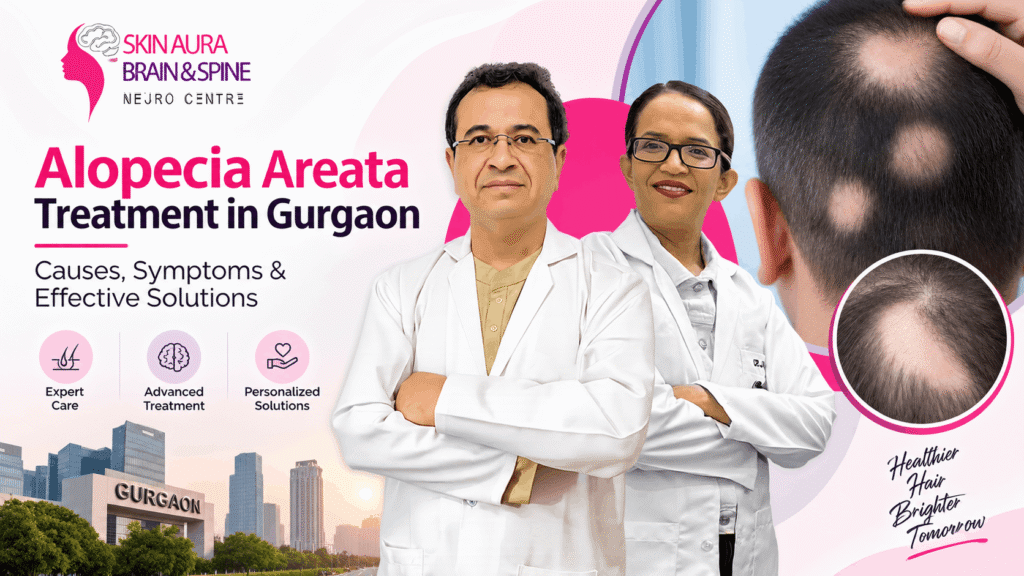

Dr. Jasdeep Kaur Malhotra
MBBS, Diploma in Dermatology, Venereology & Leprosy (DDVL)
15+ Years of Experience | Dermatologist, Trichologist & Hair Transplant Surgeon
Skin Aura Brain & Spine Neuro Centre, DLF Phase 4, Gurugram

Waking up one morning and finding a coin-sized bald patch on your scalp can be alarming — and it is more common than most people realize. This condition is called Alopecia Areata, an autoimmune disorder where the body’s own immune system mistakenly attacks hair follicles, causing sudden, patchy hair loss. If you are searching for alopecia areata treatment in Gurgaon, you are not alone — this condition affects people of every age, including children, teenagers and adults, and early, correct treatment makes a real difference to how quickly and completely the hair grows back.
At Skin Aura Brain & Spine Neuro Centre in DLF Phase 4, Gurugram, Dr. Jasdeep Kaur Malhotra has been diagnosing and treating alopecia areata and other patchy hair loss conditions for over 15 years, combining medical dermatology with advanced regenerative treatments like PRP and GFC to help patients regain confidence along with their hair.
What Is Alopecia Areata?
Alopecia areata is not the same as regular hair fall or male/female pattern baldness. In pattern baldness, hair thins gradually over months or years. In alopecia areata, hair loss is sudden and appears in round or oval patches, most commonly on the scalp, but sometimes on the eyebrows, eyelashes or beard area as well. In some cases, it can progress to alopecia totalis (complete scalp hair loss) or alopecia universalis (loss of all body hair), though most patients experience only a few localized patches.
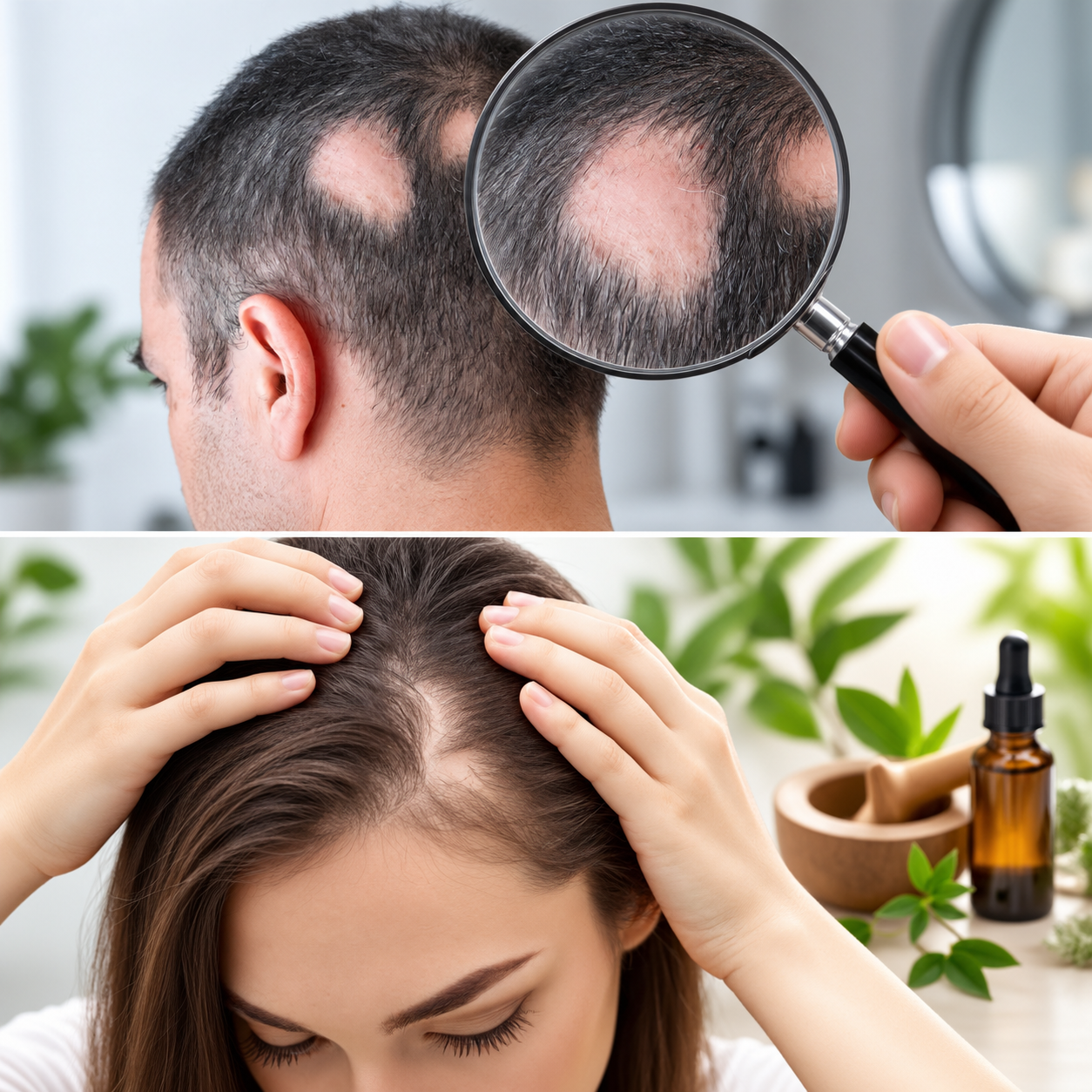
Because the underlying cause is autoimmune rather than hormonal or nutritional, alopecia areata needs a dermatologist’s evaluation rather than home remedies or over-the-counter hair oils — early diagnosis genuinely changes the outcome.
Common Causes and Triggers
The exact cause of alopecia areata is still being researched, but dermatologists have identified several contributing factors:
- Autoimmune response: The immune system mistakenly identifies hair follicles as foreign and attacks them, halting hair growth.
- Genetic predisposition: A family history of alopecia areata, thyroid disorders, or other autoimmune conditions increases risk.
- Stress: Sudden emotional or physical stress is often reported by patients just before the first patch appears — a pattern our Gurgaon patients report often, given the high-pressure lifestyle in the NCR region.
- Underlying autoimmune conditions: Thyroid disease, vitiligo, and diabetes are sometimes linked with alopecia areata.
- Infections or hormonal shifts: Occasionally trigger the first episode, particularly in younger patients.
Signs and Symptoms to Watch For
Recognising alopecia areata early helps you start treatment before the patches spread. Typical symptoms include:
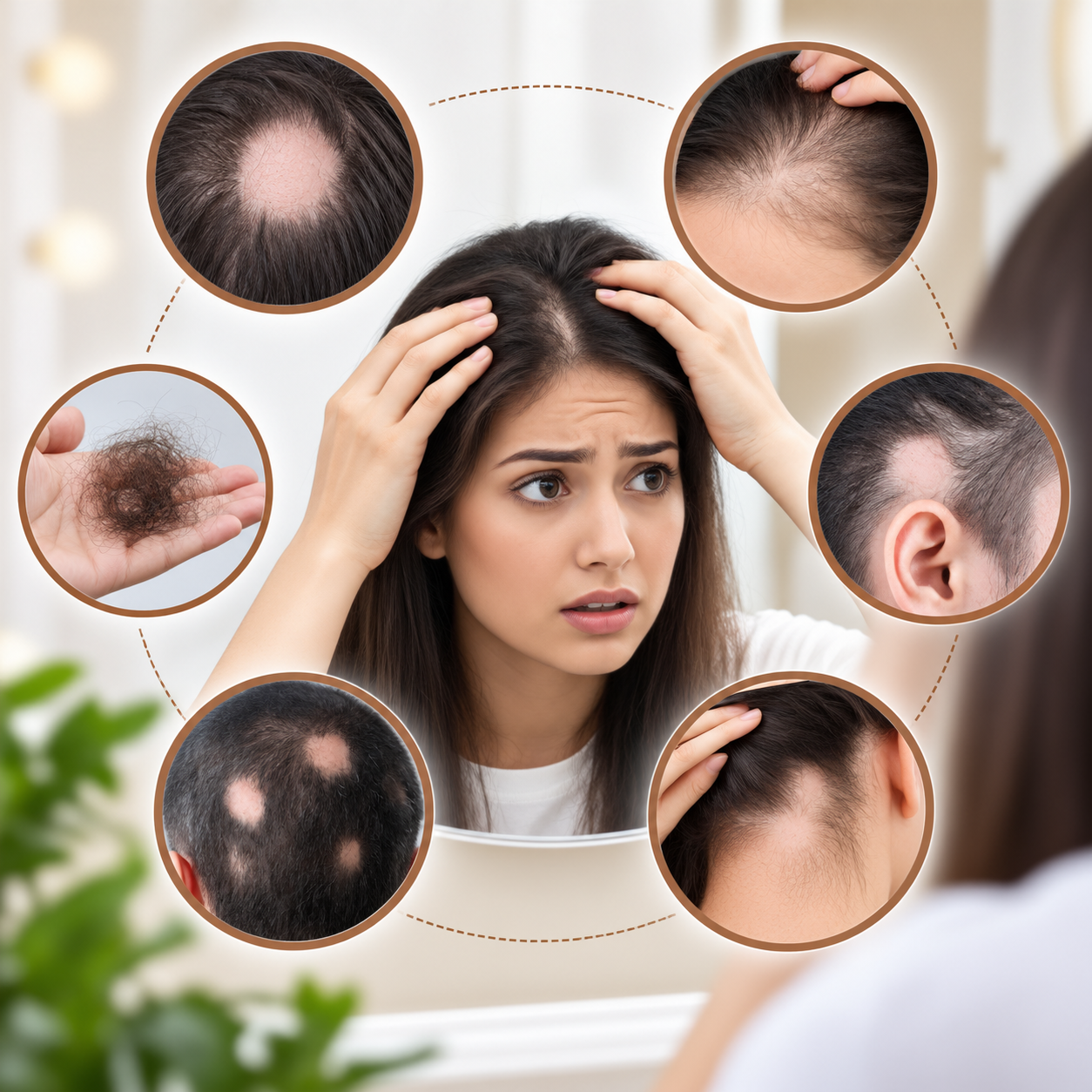
- One or more smooth, round or oval bald patches on the scalp, appearing suddenly
- Mild itching or tingling on the scalp before hair loss begins
- Exclamation-mark hairs — short hairs that are narrower at the base, seen at the edge of a growing patch
- Patchy loss of eyebrows, eyelashes, or beard hair
- Nail changes such as pitting or ridging in some patients
Note: Unlike fungal infections (which usually show scaling, redness, or itching) alopecia areata patches are typically smooth and non-scarring. A proper scalp examination by a dermatologist is the only reliable way to confirm the diagnosis.
How Is Alopecia Areata Diagnosed?
At Skin Aura, diagnosis begins with a detailed scalp and hair examination, often supported by a dermoscopy (trichoscopy) to look closely at the hair follicles and confirm the characteristic signs of alopecia areata. In select cases, blood tests are advised to rule out thyroid dysfunction or other autoimmune associations, since managing these underlying conditions is often key to a lasting recovery.
Alopecia Areata Treatment Options at Skin Aura, Gurgaon
Treatment is tailored to the extent of hair loss, the patient’s age, and how long the patches have been present. Dr. Jasdeep Kaur combines conventional dermatology with modern regenerative hair treatments for faster, more consistent regrowth:
1. Topical and Intralesional Treatments
For localized patches, corticosteroid injections directly into the affected area are often the first line of treatment, helping to calm the immune attack on the follicles. Topical corticosteroids, minoxidil, and immunotherapy creams may also be prescribed depending on the severity.
2. PRP (Platelet-Rich Plasma) Therapy
PRP uses your own blood’s growth factors to stimulate dormant hair follicles back into the growth phase. It is a well-established, minimally invasive option for alopecia areata patients who need extra support alongside medical treatment. You can read our detailed guide on PRP Treatment for Hair Fall in Gurgaon to understand how the procedure works.
3. GFC (Growth Factor Concentrate) & Mesotherapy
These regenerative techniques deliver concentrated growth factors and nutrients directly to the scalp, improving follicle health and accelerating regrowth in patchy hair loss cases — often combined with PRP for compounding results.
4. Oral Medications
For more extensive or rapidly spreading alopecia areata, Dr. Jasdeep Kaur may recommend oral immunomodulators or short courses of oral steroids under close monitoring.
5. Lifestyle & Stress Management Guidance
Since stress is a well-documented trigger, patients are also counselled on stress management, nutrition, and scalp care to reduce the chances of new patches developing during treatment.
Alopecia Areata Treatment Cost in Gurgaon
| Treatment | Approx. Cost (Per Session) |
|---|---|
| Intralesional Steroid Injection | ₹800 – ₹2,000 |
| PRP Therapy | ₹4,000 – ₹8,000 |
| GFC / Mesotherapy | ₹5,000 – ₹9,000 |
| Dermatologist Consultation | ₹800 – ₹1,500 |
Note: Final cost depends on the extent of patches, number of sessions required, and the combination of treatments recommended after your consultation. These are indicative Gurgaon market ranges, not fixed quotes.
How Long Does Hair Regrowth Take?
Most patients begin noticing fine, colourless regrowth (vellus hair) within 6-8 weeks of starting treatment, with thicker, pigmented hair filling in over 3-6 months. However, alopecia areata can occasionally recur, which is why Dr. Jasdeep Kaur recommends periodic scalp check-ups even after the patches fill in, to catch any new activity early.
Why Choose Skin Aura for Alopecia Areata Treatment in Gurgaon?
- 15+ years of dermatology experience with Dr. Jasdeep Kaur Malhotra, treating patients across Gurgaon and Delhi NCR
- Conveniently located in DLF Phase 4, opposite Supermart-2, near Sector 43, Gurugram — easily accessible from Golf Course Road, Sohna Road, and Old Gurgaon
- In-house PRP, GFC, and mesotherapy facilities — no need to visit multiple centres
- Personalised, diagnosis-led treatment plans rather than one-size-fits-all prescriptions
- 1 Lakh+ patients treated across Skin Aura’s Gurgaon and Delhi clinics
Noticed a Bald Patch? Don’t Wait to Get It Checked
Early treatment gives alopecia areata the best chance of complete regrowth. Book a consultation with Dr. Jasdeep Kaur today.
Frequently Asked Questions
Is alopecia areata curable permanently?
Alopecia areata can go into remission with treatment, and many patients see full regrowth. However, it is a chronic autoimmune condition and can recur in some individuals, which is why ongoing monitoring is recommended even after regrowth.
Is alopecia areata the same as normal hair fall?
No. Normal hair fall or pattern baldness happens gradually over time, while alopecia areata causes sudden, round or oval patches of hair loss due to an autoimmune attack on hair follicles.
Can stress alone cause alopecia areata?
Stress is a recognised trigger that can bring on the first episode or a flare-up in people who are already genetically predisposed, but it is not the sole cause — the underlying mechanism is autoimmune.
Does PRP really help in alopecia areata?
Yes, PRP therapy is commonly used alongside steroid injections or topical treatment to stimulate dormant follicles and support faster, denser regrowth, especially in patchy or slow-responding cases.
Can children get alopecia areata, and is treatment different for them?
Yes, alopecia areata can affect children. Treatment approach is milder and closely monitored, usually starting with topical treatments rather than injections, based on the child’s age and extent of patches.
When should I see a dermatologist for hair loss patches?
If you notice a sudden bald patch, especially one that is smooth without scaling or redness, consult a dermatologist as soon as possible. Early treatment within the first few months significantly improves regrowth outcomes.
Related Reads
- PRP Treatment for Hair Fall in Gurgaon
- Why Is Your Hair Falling Out? Expert Answers
- Scalp Renew for Dandruff in Gurgaon
Reference: For general medical information on alopecia areata, you may also refer to the American Academy of Dermatology’s Alopecia Areata resource.