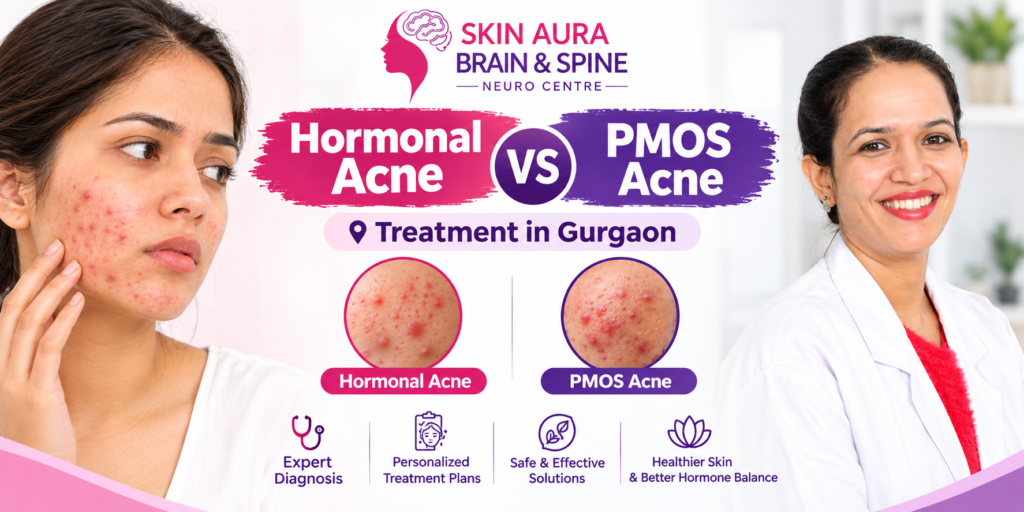
Confused about hormonal acne vs PMOS (PCOS) acne? If you’re a woman living in Gurugram or Delhi NCR and dealing with stubborn breakouts along your jawline and chin that just won’t go away — no matter how many face washes, spot treatments, or home remedies you try — you’re not alone, and it’s not just “regular acne.” At SAB Clinic, patients from DLF Phase 4, Sector 43, Golf Course Road, and South Delhi ask us the same question almost every week: “Is this hormonal acne, or could it be PMOS?”
The two are closely related but not identical, and treating them the same way rarely works. This guide breaks down the real differences, the warning signs you shouldn’t ignore, and exactly how Dr. Jasdeep Kaur approaches diagnosis and treatment at SAB Clinic.
📢 2026 Medical Update: PCOS Has Been Renamed PMOS
Polycystic Ovary Syndrome (PCOS) has officially been renamed Polyendocrine Metabolic Ovarian Syndrome (PMOS) following a global consensus led by the International PCOS Network, published in The Lancet and endorsed by 56 medical and patient organisations. The old name wrongly centred the condition around ovarian cysts, which are not actually a required feature of the disorder. Throughout this article, we use the updated term PMOS, while still referencing “PCOS” occasionally since most patients are still searching for and using the older, more familiar name.

Dr. Jasdeep Kaur Malhotra
Consultant Dermatologist, 15+ Years Experience · SAB Clinic, Gurugram | View Full Profile
What Is Hormonal Acne?
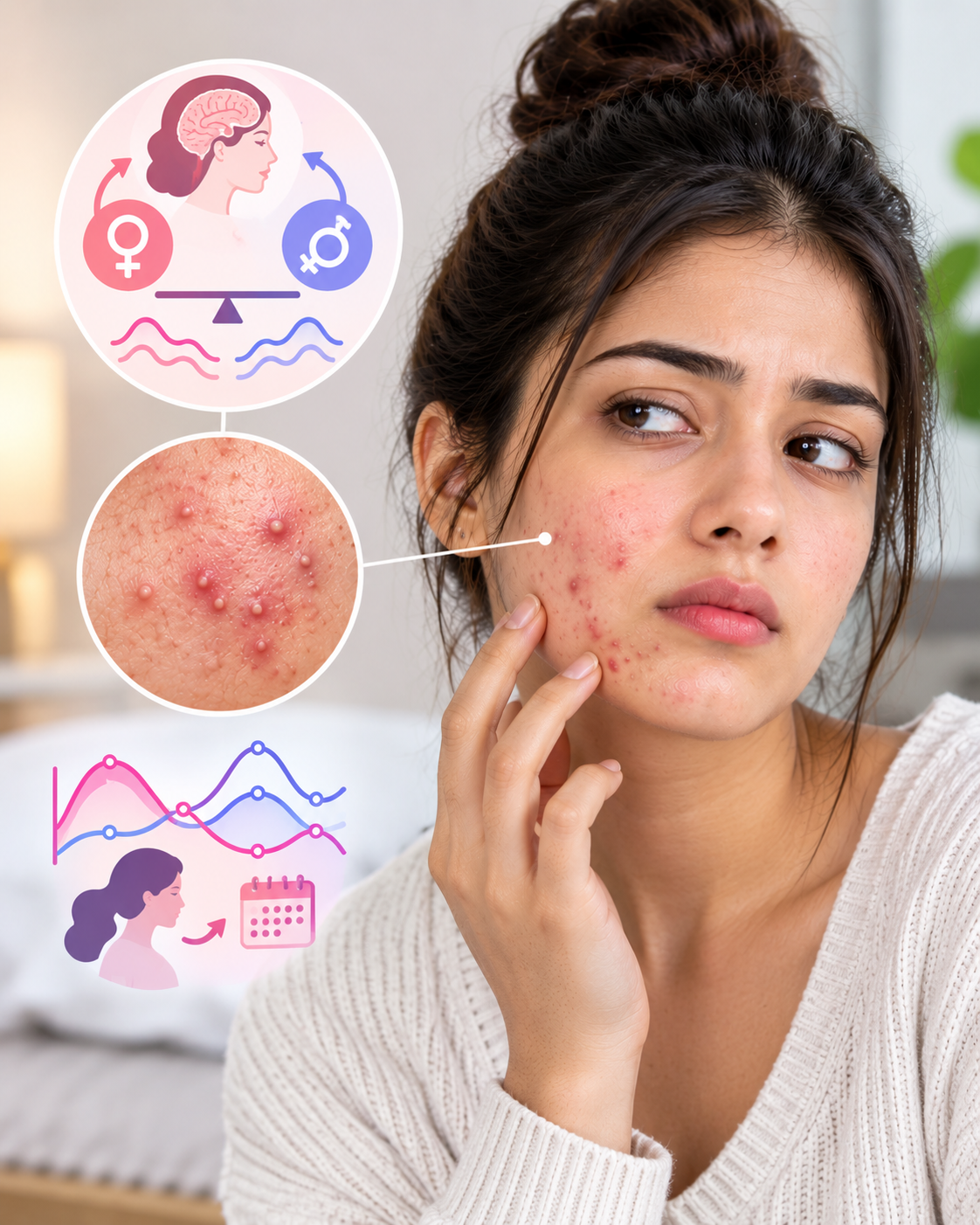
Hormonal acne refers to breakouts triggered by natural fluctuations in your hormone levels — mainly androgens, which increase oil (sebum) production in the skin. It affects teenagers during puberty, but it is just as common, sometimes more stubborn, in adult women in their 20s, 30s, and even 40s.
Hormonal acne typically shows a predictable pattern: deep, tender bumps along the jawline, chin, and lower cheeks, flaring up 5 to 7 days before your period and settling down once your cycle starts. Triggers include the menstrual cycle itself, stress, starting or stopping birth control, pregnancy, and perimenopause.
What Is PMOS Acne?
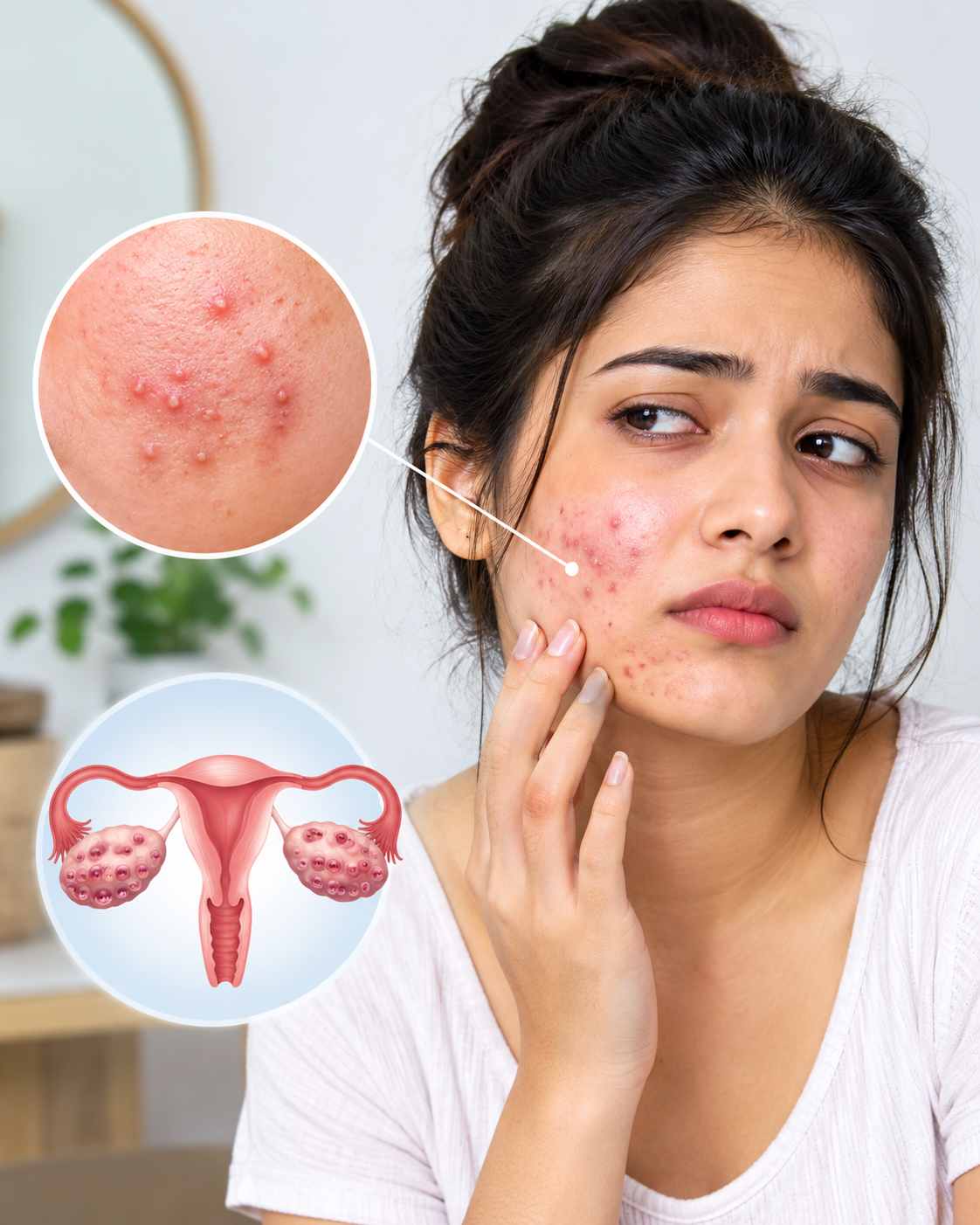
Polyendocrine Metabolic Ovarian Syndrome (PMOS) — formerly known as PCOS — is a hormonal and metabolic disorder that affects the ovaries and disrupts the balance of reproductive hormones. Roughly 30–40% of women with PMOS experience acne as one of their visible symptoms, caused by hyperandrogenism (elevated male hormones) and, in many cases, insulin resistance — both of which push the oil glands into overdrive.
Unlike ordinary hormonal acne that comes and goes with your cycle, PMOS acne tends to be persistent and doesn’t fully resolve between periods. It’s often accompanied by other PMOS symptoms such as irregular or missed periods, excess facial or body hair (hirsutism), thinning hair on the scalp, and difficulty losing weight — signs that point beyond the skin to a deeper hormonal imbalance.
⚕️ Medical Disclaimer — Please Read
PMOS (formerly PCOS) is a hormonal and metabolic health condition, not just a skin problem — self-diagnosing from a blog or treating only the acne without addressing the underlying hormone imbalance rarely gives lasting results. If you suspect PMOS, please consult a gynaecologist or endocrinologist alongside a dermatologist for proper blood work, imaging, and a combined treatment plan. This article is for general awareness only and is not a substitute for an in-person medical evaluation.
Why Does Acne Show Up on the Jawline Specifically?
The jawline and chin are the areas dermatologists look at first when hormones are suspected — and there’s a clear reason why. This part of the face has a higher concentration of androgen-sensitive oil glands compared to the forehead or cheeks. When androgen levels rise — whether from your natural monthly cycle or from a condition like PMOS — these glands respond by producing excess sebum, which mixes with dead skin cells and clogs the pores along the jaw and chin first.
This is why “jawline acne” and “hormonal acne” are almost used interchangeably in dermatology. But the pattern alone doesn’t confirm the cause — a teenager, a stressed working professional, and a woman with PMOS can all get the exact same jawline breakout for very different underlying reasons. That’s precisely why the timing, associated symptoms, and hormonal history matter more than the location of the pimple.
Understanding the Hormonal Cycle Behind Acne
In a normal menstrual cycle, oestrogen dominates the first half and progesterone rises in the second half (the luteal phase), just before your period. Progesterone slightly increases oil production, and testosterone — present in small amounts in every woman — becomes relatively more active as oestrogen drops. This is why most women notice a predictable flare-up of jawline pimples about 5–7 days before their period, which calms down once bleeding starts and oestrogen rises again. This monthly rhythm is the hallmark of classic hormonal acne.
In PMOS, this rhythm breaks down. Because ovulation is irregular or absent, the hormonal “reset” that normally happens every month doesn’t occur consistently. Androgens stay persistently elevated instead of rising and falling in a cycle, which is exactly why PMOS acne doesn’t fully clear between periods the way ordinary hormonal acne does — the skin never gets its usual “off” phase.
Cystic Acne vs Hormonal Acne vs PMOS Acne — Don’t Confuse These Three
Patients often use “cystic acne” and “hormonal acne” as if they mean the same thing, but they describe two different aspects of a breakout — one describes how deep and severe the pimple is, the other describes what’s causing it.
- Cystic acne is a description of severity — large, deep, pus-filled, painful lumps under the skin that are prone to scarring. Cystic acne can be caused by genetics, bacteria, and clogged pores, with or without a hormonal trigger.
- Hormonal acne is a description of cause — breakouts (which may be mild, moderate, or cystic) driven by hormonal fluctuations, most often cyclical and jawline-based.
- PMOS acne is a specific sub-type of hormonal acne — it is frequently cystic in nature because the androgen elevation is more sustained and severe than a typical monthly fluctuation, and it comes bundled with the non-skin symptoms of PMOS (irregular cycles, hirsutism, weight changes).
In short: all PMOS acne is hormonal, but not all hormonal acne is PMOS — and either one can present as cystic acne if left untreated for long enough. This is exactly why an accurate diagnosis at SAB Clinic looks at the full picture — severity, pattern, cycle, and other symptoms together — rather than treating “cystic pimples” as a stand-alone problem.
Hormonal Acne vs PMOS Acne: Quick Comparison
| Feature | Hormonal Acne (General) | PMOS-Related Acne |
|---|---|---|
| Timing | Cyclical — flares before periods, settles after | Fairly constant, doesn’t fully clear between cycles |
| Location | Jawline, chin, lower cheeks | Jawline, chin, sometimes chest and back too |
| Associated signs | Usually none beyond breakouts | Irregular periods, excess facial/body hair, scalp thinning, weight gain |
| Underlying cause | Normal menstrual hormone shifts, stress, birth control changes | Elevated androgens + insulin resistance from PMOS |
| Response to topical treatment alone | Usually improves well | Often needs hormonal management alongside skin treatment |
Red Flags That Suggest PMOS, Not Just Hormonal Acne
- Periods that are irregular, delayed, or skipped for months
- Excess hair growth on the chin, upper lip, or jawline (hirsutism)
- Sudden or stubborn weight gain, especially around the abdomen
- Thinning hair or a widening centre-parting on the scalp
- Acne that hasn’t responded to 2–3 months of proper topical treatment
If two or more of these apply to you, it’s worth getting evaluated rather than continuing to self-treat.
How SAB Clinic Diagnoses the Difference
Getting the hormonal acne vs PMOS acne distinction right at the start saves months of trial-and-error treatment. At SAB Clinic, Dr. Jasdeep Kaur doesn’t treat acne on the skin’s surface alone. A proper evaluation includes a detailed history of your menstrual cycle, breakout pattern, and family history, followed — where PMOS is suspected — by hormonal blood tests (LH, FSH, testosterone, DHEA-S, AMH) and, if needed, a pelvic ultrasound in coordination with a gynaecologist. This is what separates a lasting solution from another round of creams that stop working in a few months.
Treatment Options for Hormonal Acne
For acne that is clearly cycle-linked without other PMOS signs, treatment usually focuses directly on the skin:
- Topical retinoids and prescription-strength actives to normalise oil production
- Chemical peels to control breakouts and fade post-acne marks
- Medical-grade facials and comedone extraction for clogged pores
- Lifestyle adjustments around stress and sleep, which strongly influence flare frequency
Treatment Options for PMOS-Related Acne
PMOS acne responds best to a combined approach that treats both the skin and the underlying hormonal driver:
- Dermatologist-guided oral and topical treatment tailored to hormonal acne patterns
- RF Microneedling for active acne control and scar remodelling
- PRP therapy where PMOS has also caused scalp hair thinning
- Pigmentation treatment for the dark marks PMOS acne often leaves behind
- Referral for hormonal management with a gynaecologist/endocrinologist alongside your dermatology plan
Diet & Lifestyle: Why It Matters More With PMOS
Because PMOS is closely tied to insulin resistance, high-sugar and high-glycaemic foods can directly worsen breakouts by pushing androgen levels up. Patients often see visible improvement — alongside medical treatment — by shifting to a low-glycaemic diet rich in fibre, lean protein, and healthy fats, managing stress, and maintaining consistent sleep. Diet alone rarely clears PMOS acne, but it makes every other treatment work better and last longer.
Related Treatments at SAB Clinic
Depending on your diagnosis, your treatment plan may combine one or more of the following:
Frequently Asked Questions
How can I tell if my acne is hormonal or caused by PMOS (PCOS)?
Hormonal acne linked purely to your menstrual cycle usually flares 5–7 days before your period and settles once it starts. If your breakouts along the jawline and chin are constant, deep, and come along with irregular periods, excess facial hair, or stubborn weight gain, PMOS (Polyendocrine Metabolic Ovarian Syndrome, formerly called PCOS) may be the underlying driver. A dermatologist along with a hormonal blood workup (LH, FSH, testosterone, AMH) and a pelvic ultrasound can confirm this.
Can PMOS (PCOS) acne be cured permanently?
PMOS itself is a long-term hormonal condition and is managed rather than “cured,” but the acne it causes can be controlled very effectively. With the right combination of dermatological treatment, hormonal management, and lifestyle changes, most patients see clear, stable skin within 3–6 months.
Do I need to see a gynaecologist or a dermatologist for PMOS (PCOS) acne?
Both. A dermatologist treats the acne, scarring, and skin symptoms directly, while a gynaecologist or endocrinologist manages the underlying hormonal imbalance. At SAB Clinic, Dr. Jasdeep Kaur coordinates the dermatology side of your treatment and refers you for the right hormonal workup when needed.
Is jawline and chin acne always a sign of PMOS (PCOS)?
No. Jawline and chin acne is the classic pattern for hormonal acne in general, which can be triggered by your menstrual cycle, stress, or birth control changes even without PMOS. PMOS is one possible cause among several, which is why a proper evaluation matters before assuming a diagnosis.
What treatments work best for PMOS (PCOS)-related acne in Gurgaon?
Treatment usually combines topical retinoids, oral medication where indicated, chemical peels, and RF microneedling for scarring, alongside insulin-resistance-friendly diet changes. At SAB Clinic, Gurugram, treatment plans are customised after assessing your acne severity, skin type, and hormonal reports.
Does diet really affect PMOS (PCOS) acne?
Yes. Since PMOS is closely linked with insulin resistance, a high-sugar, high-glycaemic diet can worsen breakouts by increasing androgen production. Shifting to a low-glycaemic diet with more fibre, protein, and healthy fats often improves acne alongside medical treatment.
Why was PCOS renamed to PMOS?
In 2026, a global consensus led by the International PCOS Network and published in The Lancet renamed Polycystic Ovary Syndrome (PCOS) to Polyendocrine Metabolic Ovarian Syndrome (PMOS). The old name wrongly centred the condition around ovarian cysts, which research shows are not actually increased in this condition. The new name better reflects that it is a broader hormonal and metabolic disorder, and the change was endorsed by 56 professional and patient organisations worldwide.
Not Sure If It’s Hormonal Acne or PMOS?
Get an accurate diagnosis for your hormonal acne vs PMOS (PCOS) acne concern and a treatment plan built around your hormones — not guesswork. Consult Dr. Jasdeep Kaur at SAB Clinic, DLF Phase 4, Gurugram.
References: American Academy of Dermatology — Hormonal Therapy for Acne · University of Rochester Medicine — PCOS Is Now PMOS. This article is for informational purposes and does not replace an in-person medical consultation.
One thought on “Hormonal Acne vs PMOS Acne: How to Tell the Difference and What Actually Works”