Melasma is one of the most frustrating skin conditions treated at skin clinics across Gurgaon. Those stubborn brown and grey-brown patches on the cheeks, forehead, upper lip, and chin seem to resist everything — expensive creams, home remedies, and even treatments that work beautifully for other types of pigmentation. If you have been struggling with melasma in Gurgaon and feel like nothing is working, this guide from SAB Clinic will explain exactly why melasma is so challenging — and exactly what does work when approached correctly.
What is melasma and why does it happen?
Melasma is a chronic hyperpigmentation disorder caused by overactive melanocytes — the pigment-producing cells in the skin — producing excess melanin in specific areas of the face. It is far more common in women than men and predominantly affects people with Fitzpatrick skin types 3–5 — making it extremely prevalent among women in Gurgaon and across India.
The primary triggers for melasma are sun exposure — UV radiation is the single most important driver, stimulating melanocyte activity with every unprotected sun exposure, hormonal changes — pregnancy (causing the classic mask of pregnancy), oral contraceptives, and hormonal therapy are all well-established triggers, heat exposure — infrared radiation from heat sources can independently stimulate melanin production, making Gurgaon’s harsh summers particularly problematic for melasma patients, genetic predisposition — melasma runs strongly in families, and certain medications including photosensitising drugs that increase skin sensitivity to UV.
Why melasma is different from other pigmentation
Melasma is not simply dark spots. It is a complex disorder involving both epidermal (surface layer) and dermal (deeper layer) melanin deposition in many patients. This is why standard skin brightening treatments and basic peels that work well for post-acne dark marks often produce only partial improvement in melasma — they address surface pigmentation but leave dermal melanin untouched.
Additionally melasma has a strong tendency to relapse — even after successful treatment — if the triggering factors, particularly sun exposure, are not rigorously controlled. This is the most important thing every melasma patient at SAB Clinic Gurgaon must understand from the very first consultation.
Best melasma treatments at SAB Clinic Gurgaon
Topical depigmenting agents form the foundation of every melasma treatment protocol at SAB Clinic Gurgaon. Prescription-strength hydroquinone — the gold standard topical for melasma — combined with tretinoin and a mild topical steroid in a triple combination formula produces significant improvement in epidermal melasma over 8–12 weeks. Non-hydroquinone alternatives including tranexamic acid, kojic acid, niacinamide, azelaic acid, and cysteamine are used for patients who cannot tolerate hydroquinone or require longer-term maintenance.
Chemical peels — Superficial peels with glycolic acid, mandelic acid, or lactic acid accelerate melasma treatment by increasing epidermal turnover and enhancing penetration of topical depigmenting agents. At SAB Clinic Gurgaon, peels are performed at low concentrations with short contact times to minimise the risk of post-inflammatory hyperpigmentation — a real concern in Indian skin that must be carefully managed.
Tranexamic acid mesotherapy — Microinjections of tranexamic acid directly into the dermis target dermal melanin — the deeper pigment layer that topical products cannot adequately reach. This is one of the most effective treatments for mixed epidermal-dermal melasma and is highly popular among patients at SAB Clinic Gurgaon.
Q-switched Nd:YAG laser toning — Low-fluence Q-switched Nd:YAG laser toning is the safest and most effective laser approach for melasma on Indian skin. Multiple sessions produce progressive lightening of both epidermal and dermal pigment with minimal risk of post-treatment darkening when performed by a qualified dermatologist at a trusted skin clinic in Gurgaon.
Oral tranexamic acid — An increasingly evidence-based oral treatment for melasma, particularly for patients with extensive or treatment-resistant pigmentation. It works systemically to reduce melanocyte stimulation and has shown significant efficacy in clinical studies. SAB Clinic Gurgaon prescribes oral tranexamic acid as part of combination melasma protocols where appropriate.
The most important melasma treatment of all — sun protection
No melasma treatment — regardless of how advanced or expensive — will produce lasting results without rigorous, consistent sun protection. Every unprotected sun exposure in Gurgaon’s intense UV environment partially undoes whatever treatment progress has been achieved.
At SAB Clinic Gurgaon, every melasma patient receives non-negotiable sun protection instructions — SPF 50+ broad-spectrum sunscreen applied every morning and reapplied every 2–3 hours during outdoor exposure, physical sun protection with wide-brimmed hats and sun-protective clothing, avoidance of peak sun hours between 10am and 4pm, and tinted sunscreen containing iron oxides — which provides protection against visible light, a significant contributor to melasma that regular sunscreens do not block.
Before and after melasma treatment
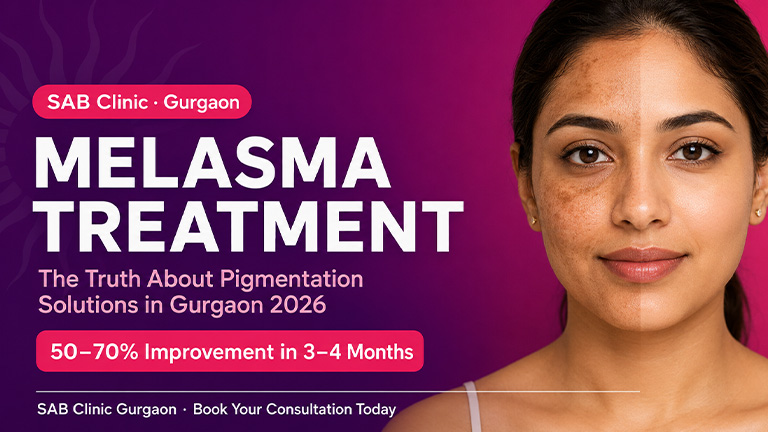
With a combination approach — topical treatment, chemical peels, laser toning, and strict sun protection — most melasma patients at SAB Clinic Gurgaon achieve 50–70% improvement in pigmentation intensity within 3–4 months of starting treatment. Maintenance therapy and ongoing sun protection are essential to sustain results. Patients who are diligent with sun protection maintain their improvement far better than those who are not.
Frequently asked questions
Can melasma be permanently cured at a skin clinic in Gurgaon?
Melasma is a chronic condition that can be effectively controlled and significantly lightened but has a tendency to recur with sun exposure and hormonal changes. With the right treatment and rigorous maintenance at SAB Clinic Gurgaon, most patients achieve and maintain significantly lighter, more even skin long-term.
Which treatment works fastest for melasma in Gurgaon?
A combination of prescription triple combination cream, monthly chemical peels, and tranexamic acid — oral or injectable — combined with strict sun protection produces the fastest and most durable melasma improvement at SAB Clinic Gurgaon.
Is laser safe for melasma on Indian skin?
Q-switched Nd:YAG laser toning at low fluence is safe and effective for melasma on Indian skin when performed by a qualified dermatologist. Aggressive laser settings or incorrect laser choice can worsen melasma — which is why choosing a qualified skin clinic in Gurgaon with experienced dermatologists is critical.
Why does my melasma keep coming back after treatment?
Melasma recurs primarily because of continued sun exposure and ongoing hormonal influences. Treatment clears existing pigmentation but does not change the underlying genetic tendency of melanocytes to overproduce pigment in response to these triggers. Maintenance treatment and lifelong sun protection are therefore essential.
How many sessions does melasma treatment take at SAB Clinic Gurgaon?
Most patients require a minimum of 3–6 months of active treatment combining topical therapy, monthly peels, and laser toning sessions. Maintenance treatment continues alongside strict sun protection.
Book your melasma consultation at SAB Clinic — the trusted skin clinic in Gurgaon
If melasma is affecting your confidence and previous treatments have not delivered lasting results, book a consultation at SAB Clinic Gurgaon for a comprehensive assessment and a properly designed combination treatment protocol. Serving patients from DLF, Golf Course Road, South Delhi, Sohna Road, and across NCR. Book today.