
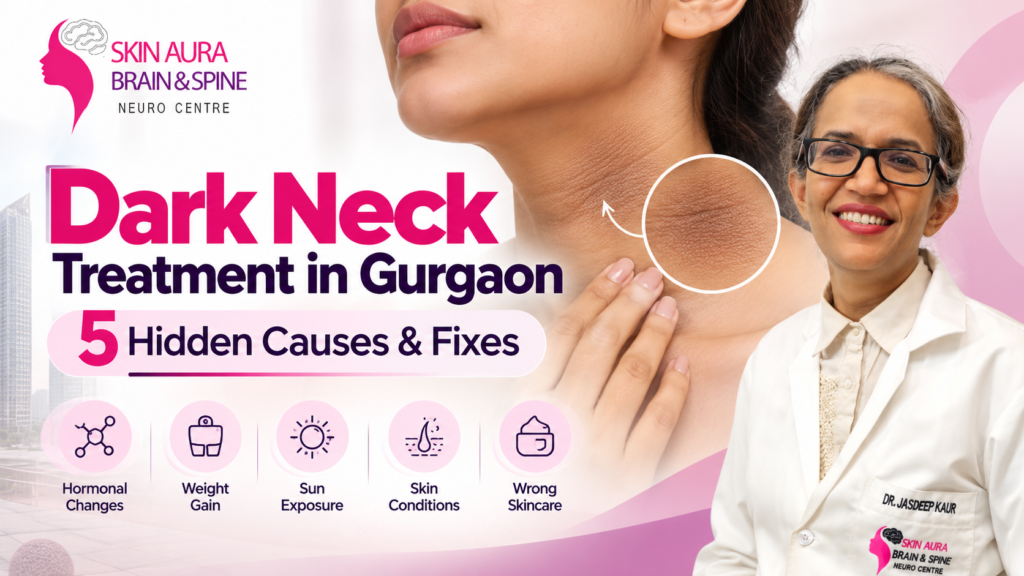
You have scrubbed with a loofah, tried lemon, besan, potato juice and three “whitening” creams, and the dark band on your neck is still there. Sometimes it looks darker, thicker, even a little velvety. If that sounds familiar, you are not dealing with dirt, and you are not alone. This is one of the most common reasons people in Gurgaon and Delhi NCR walk into a dermatologist’s clinic, and it is also one of the most misunderstood.
If you are searching for dark neck treatment that actually works, the first step is finding the cause, not just hiding the colour. The key thing most blogs skip: a dark neck or dark underarms is sometimes only a cosmetic problem, but sometimes it is your skin giving an early signal about what is happening inside the body. Treating only the colour, without finding the cause, is the reason results fade and the patches come back. This guide, written from the dermatology point of view at SAB Clinic (Skin Aura Brain & Spine Neuro Centre), explains how to tell the difference and what genuinely works.
Short mein samjhiye (Quick Summary)
- Agar gardan ya underarms ki skin kaali + mota + makhmali (velvety) ho gayi hai aur scrub karne se bhi nahi jaati, to ye aksar acanthosis nigricans hota hai, sirf tan ya gandagi nahi.
- Iska sabse common reason hai insulin resistance: weight gain, PCOS, pre-diabetes ya diabetes. Isliye pehle cause dhoondhna zaroori hai.
- Scrubbing, lemon aur bleach creams se patches kam nahi hote, aur kabhi kabhi badh jaate hain.
- Sahi dark neck treatment = root cause control + medical creams + zarurat ho to peels / laser, dermatologist ki dekh-rekh mein.
Is it just tan, or is it something more?
Not every dark neck is the same condition. Before choosing any treatment, a dermatologist first works out which of these you have, because each needs a different approach.
| Type of darkening | How it looks and feels | Usual reason |
|---|---|---|
| Acanthosis nigricans (AN) | Brown to dark patches that feel thick and velvety, in folds: back and sides of the neck, underarms, groin, knuckles, elbows | High insulin levels (insulin resistance), weight gain, PCOS, certain medicines |
| Sun tan / pigmentation | Flat, even darkness on sun-exposed skin, no thickening | UV exposure, melasma-type pigmentation |
| Friction darkening | Darker skin where clothes, chains or skin-on-skin rub, often with rough texture | Tight collars, heavy jewellery, thigh or underarm rubbing |
| Shaving / waxing / deodorant darkening (underarms) | Grey-brown underarms, sometimes with tiny bumps | Repeated irritation, ingrown hair, harsh products |
| Fungal or bacterial skin infection | Reddish-brown or scaly patches, may itch | Sweat, humidity, skin folds |
A quick at-home clue: tan fades with strict sun protection over time, while acanthosis nigricans has a thick, velvety feel and stays in the body folds. Both can exist together, which is why self-diagnosis often goes wrong. You can read how we separate similar-looking colour problems in our guide on pigmentation vs melasma.
Dark Neck Treatment Starts With the Cause: 5 Hidden Reasons
1. Insulin resistance (the most common hidden reason)
When the body’s cells stop responding well to insulin, the pancreas produces more of it. Very high insulin levels stimulate skin cells in the folds to multiply faster and to produce more pigment. The result is the dark, thick, velvety patch. According to the American Academy of Dermatology, acanthosis nigricans can be a sign of pre-diabetes, and acting early with lifestyle changes may help prevent diabetes from developing.
2. PCOS and hormonal imbalance
Many women with irregular periods, acne, excess facial hair or weight gain notice a dark neck as the first visible sign. If this sounds like you, our article on hormonal acne vs PCOS acne explains the wider picture.
3. Weight gain and sedentary lifestyle
Extra weight increases insulin resistance and also increases skin-on-skin friction in the folds. Both push the darkening along. Even a modest, steady reduction in weight can visibly lighten patches in many people.
4. Medicines
Some medicines, including certain hormonal medicines, high-dose niacin and some steroids, can trigger or worsen AN. Never stop a prescribed medicine on your own. Tell your dermatologist everything you take so it can be reviewed.
5. Friction, sun and hair-removal habits
For underarms in particular, daily shaving, aggressive waxing, harsh antiperspirants and tight clothing keep the skin inflamed. Inflamed skin responds by producing extra pigment, called post-inflammatory hyperpigmentation.
When a dark patch needs a doctor quickly
See a dermatologist soon if the darkening appears suddenly and spreads fast, affects the lips, mouth, palms or soles, comes with unexplained weight loss, or is accompanied by many new skin tags and tiredness. In rare cases, rapid-onset acanthosis nigricans can be linked to an internal illness, so it should never be dismissed as a “beauty problem”.
What will a dermatologist do first?
A proper consultation looks at more than the patch itself:
- Examination of the neck, underarms, knuckles and other folds, and a check for skin tags (small soft growths that often travel along with insulin resistance).
- History of weight changes, periods, family diabetes, medicines, shaving or waxing habits and products you currently use.
- Basic tests where indicated, such as fasting blood sugar, HbA1c, fasting insulin, lipid profile, thyroid profile and a hormonal work-up if PCOS is suspected. The doctor decides which tests are actually needed for you.
- A treatment plan with two tracks: fixing the cause, and improving the skin.
Dark Neck Treatment Options That Actually Work
Step 1: Fix the cause
This is the part no cream can replace in any dark neck treatment. Depending on your results, it may include a balanced diet with fewer refined carbohydrates and sugary drinks, regular exercise, gradual weight reduction, sleep correction and, where needed, medical management of insulin resistance, PCOS or thyroid issues under a physician. When the insulin level comes down, the skin often softens and lightens on its own over months.
Step 2: Medical skin treatment for dark neck
- Prescription creams that smooth thickened skin and gently renew the surface (for example retinoid-based or keratolytic preparations, chosen by your doctor for your skin type).
- Targeted pigment-lightening creams used for a defined period under supervision, not as a long, unsupervised “fairness” routine.
- Treatment of infection or irritation if a fungal or bacterial component is present.
Step 3: In-clinic procedures (when creams alone are not enough)
For stubborn, thick or very dark areas, a dermatologist may add procedures in carefully planned sessions:
- Chemical peels to lift dead, pigmented surface cells and improve texture. See our overview of chemical peel treatment in Gurgaon.
- Laser or light-based skin treatments to reduce pigment and smoothen thickened skin. Settings must be conservative on Indian skin, because aggressive lasers can cause new darkening. Read more about fractional laser treatment and our pigmentation treatment page.
- Laser hair reduction for underarms when shaving and waxing are the main trigger. Fewer hair-removal injuries means less irritation and less darkening. See laser hair reduction in Gurgaon.
- Skin rejuvenation and brightening programmes to improve overall tone once the patch is under control: skin rejuvenation & brightening.
- Removal of associated skin tags, which commonly sit in the same neck and underarm folds: mole, wart and skin tag removal.
What results should you realistically expect?
Dark neck treatment is a gradual-improvement process, not an overnight fix. Most people need a few weeks before the texture starts to soften and a few months for visible lightening. The number of sessions depends on how thick and dark the patch is and, most importantly, how well the underlying cause is controlled. If the cause stays active, the patches can return after treatment. That is the honest reason a good clinic talks about control and maintenance, not just “removal”.
What NOT to Do During Dark Neck Treatment
- Do not scrub hard. Rubbing with a loofah, pumice or scrub pad irritates the skin and can make it darker and rougher.
- Do not use lemon, baking soda or random bleaching creams. They can burn the skin and leave permanent dark marks.
- Do not use steroid-containing “fairness” creams from chemists or online sellers. They can thin the skin and cause stretch marks, acne and rebound pigmentation.
- Do not ignore it for years. If the cause is insulin resistance, the earlier it is caught, the easier it is to reverse.
- Do not rely on “detox” or injection shortcuts. No injection can fix the insulin problem underneath a dark neck.
Daily Care That Supports Dark Neck Treatment
- Wash gently with a mild cleanser and pat dry; keep folds dry to reduce friction and fungal growth.
- Apply a fragrance-free moisturiser after bathing, since dry, flaky skin looks darker.
- Use broad-spectrum sunscreen on the neck every morning, even indoors near windows or while driving.
- Switch to soft, loose collars and avoid heavy chains that rub the neck.
- For underarms, reduce shaving frequency, avoid harsh razors and use a gentle, alcohol-free deodorant.
- Walk or exercise for at least 30 minutes most days and cut down sugary drinks and refined snacks.
Medically reviewed approach by Dr. Jasdeep Kaur Malhotra
MBBS, Diploma in Dermatology, Venereology & Leprosy · 15+ years of experience
Consultant Dermatologist, SAB Clinic (Skin Aura Brain & Spine Neuro Centre), DLF Phase 4, Gurugram. View doctor profile
Dark Neck Treatment in Gurgaon: Why Get It Checked at a Dermatology Clinic?
Because the right dark neck treatment is rarely “one cream”. At SAB Clinic the focus is on identifying why the skin is darkening, advising when blood tests or a physician’s input are needed, and then choosing the gentlest effective option for your skin. Patients often tell us they appreciate a conservative approach rather than being pushed into unnecessary procedures. Whether you live in DLF Phase 4, Sector 43, Golf Course Road or elsewhere in Gurugram and Delhi NCR, a single consultation can usually tell you whether yours is simple pigmentation or a pattern that needs a deeper look.
Frequently Asked Questions
1. Why is my neck dark even though I bathe daily?
A dark neck is usually not caused by dirt. The common reasons are acanthosis nigricans linked to insulin resistance or PCOS, sun tanning, friction from collars and jewellery, or irritation from products. Scrubbing does not remove these, and can worsen them.
2. Is a dark neck a sign of diabetes?
It can be an early sign of insulin resistance or pre-diabetes, but not always. Many people with a dark neck have normal sugar levels and the cause is friction or tan. A dermatologist can advise whether tests such as fasting sugar, HbA1c or insulin levels are worth doing in your case.
3. Is dark neck treatment permanent?
They can improve significantly, and in many people they fade a great deal. Permanence depends on the cause. If insulin resistance, PCOS or weight gain remains uncontrolled, the patches can return. Controlling the cause plus a maintenance routine gives the most lasting results.
4. How long does dark neck treatment take to show results?
Texture usually begins to soften in a few weeks, and visible lightening commonly takes a few months. Thick, long-standing patches take longer. Your dermatologist will give a realistic timeline after examining the area.
5. Are laser or peel treatments safe for dark neck on Indian skin?
They can be, when settings are conservative, sessions are spaced properly and the doctor has experience with Indian (Fitzpatrick type 4 to 5) skin. Aggressive treatment can cause new pigmentation, so a test area and careful sun protection are important.
6. Do home remedies like lemon, besan or potato work?
There is no good evidence that they treat acanthosis nigricans. Lemon in particular can irritate the skin and cause dark marks when the skin is exposed to sunlight. Gentle moisturising and sun protection are far more useful.
7. Mere underarms shaving ke baad kaale ho gaye hain, kya karein?
Shaving, waxing aur harsh deodorant se irritation hoti hai, jisse skin kaali ho jaati hai. Shaving kam karein, gentle products use karein aur zarurat ho to laser hair reduction ke baare mein dermatologist se baat karein, taaki baar-baar irritation na ho.
8. Kya weight kam karne se dark neck theek ho jaati hai?
Aksar haan. Weight aur insulin resistance kam hone par kaafi logon mein gardan ka kaalapan aur motapan dheere-dheere kam hota hai. Isme kuch mahine lag sakte hain, aur sath mein medical creams ya procedures se result jaldi aur behtar mil sakta hai.
9. Mujhe dermatologist ko kab dikhana chahiye?
Agar patch achanak aaya hai, tezi se faila hai, hothon/palms par bhi hai, ya sath mein weight loss, thakaan ya bahut saare skin tags hain, to jaldi dikhayein. Agar kuch mahine se gardan kaali aur mulayam-makhmali ho rahi hai, tab bhi consultation lena sahi rahega.
Need dark neck treatment that actually works?
Get the cause checked first, then the right treatment plan, with Dr. Jasdeep Kaur.
Call +91 85868 44718
WhatsApp Us
H.N. 7311 (GF & Basement), Opp. Supermart-2, DLF Phase 4, Gurugram – 122002 · Mon-Sat 10:30 AM-12:30 PM & 6:00-7:30 PM · Sun 10:00 AM-2:00 PM
Disclaimer: This article is for general education and does not replace a personal medical consultation. Skin conditions that darken, thicken or change quickly should be examined by a qualified dermatologist. Treatment and results vary from person to person.